


Response
Rated
Guaranteed










Century Garage Door handles the full list of repairs that Banks homeowners call about most often, from broken torsion and extension springs to frayed or snapped cables that leave the door sitting crooked on the floor. When a garage door opener starts grinding, reversing on its own, or refusing to respond to the remote, the technicians can diagnose the logic board, replace the drive gear, or swap out the entire unit depending on what the inspection turns up. Bent or cracked panels get straightened or replaced to restore the door’s structure, and misaligned tracks get realigned and secured so the door runs smoothly without rubbing or binding along the frame. Worn rollers get swapped for new nylon or steel versions, and safety sensors that are out of alignment or showing a blinking light get adjusted and tested until the auto-reverse function works exactly as it should. Residents near the Banks Community Center or anywhere else around town can reach Century Garage Door for same-day service on any of these repairs.
Homeowners around Banks run into the same garage door problems over and over, and most of them come down to a handful of specific parts failing in predictable ways. Torsion springs sit above the door on a steel shaft, and when one snaps, the door loses the counterbalance it needs to lift, leaving the opener motor straining against dead weight or refusing to move the door at all. Lift cables run from the bottom bracket on each side of the door up to the drum, and when a cable frays or snaps, one side of the door drops while the other stays up, throwing the whole panel assembly off the horizontal tracks. Bent panels are another frequent call we get in Banks, usually after a vehicle backs into the door, and even a single creased section can bind against the vertical track and stop the door mid-travel. Opener failures tend to trace back to the logic board, the drive gear, or a stripped trolley carriage, and figuring out which one is the problem saves homeowners from replacing an entire unit when a $20 gear kit would do the job. Getting these parts diagnosed and replaced correctly keeps the door running safely instead of putting stress on the motor, the tracks, and the remaining hardware every time the door cycles.
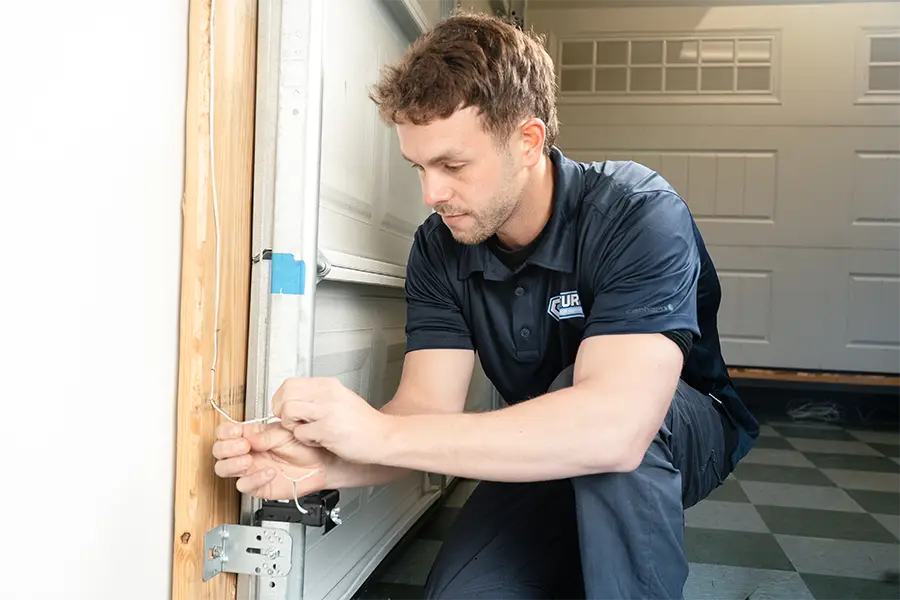
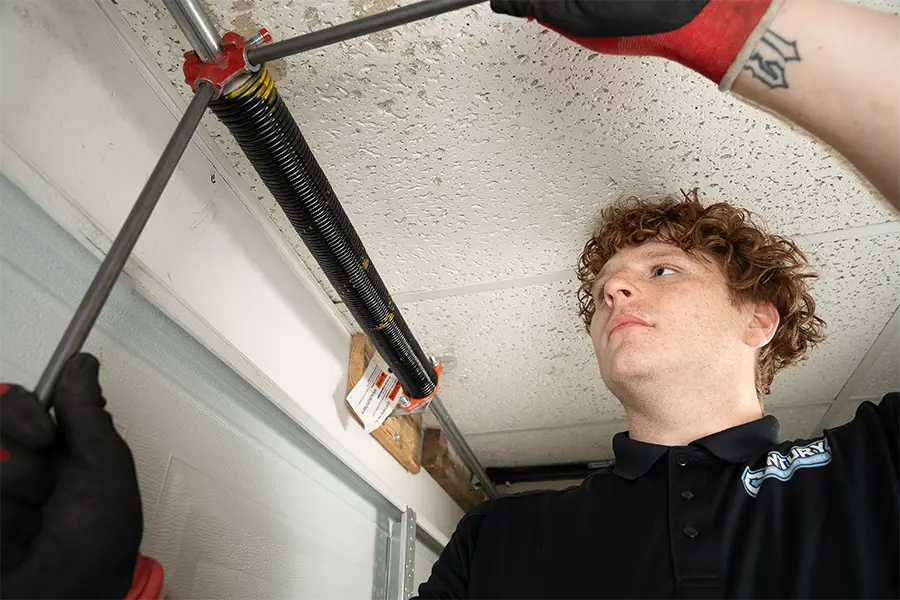
Garage door springs and cables are under serious tension, and when one fails, homeowners in Banks usually know it right away – a loud bang from the garage, a door that feels like it weighs 300 pounds when you try to lift it manually, or cables hanging loose and coiled on the floor. Torsion springs sit on a steel shaft above the door and use torque to counterbalance the door’s weight, while extension springs run along the horizontal tracks on either side and stretch to do the same job – both store enough energy to cause serious injury or death if handled incorrectly, which is why this is not a repair to attempt yourself with a YouTube tutorial and a pair of pliers. When a Century Garage Door technician arrives, they start by releasing any remaining tension in the old spring using winding bars on the torsion cone, then remove the broken spring from the shaft, measure the wire diameter, inside diameter, and length to match the correct replacement, and wind the new spring to the proper turn count based on the door’s weight. For cable repairs, the tech removes the cable drum, threads the new cable through the bottom bracket, winds it onto the drum grooves, and tensions it evenly on both sides so the door travels straight. Getting these adjustments right – turn count, cable tension, and drum alignment – is what keeps the door balanced and prevents the opener from burning out, and it is something the Banks team at Century Garage Door handles on a straightforward service call.
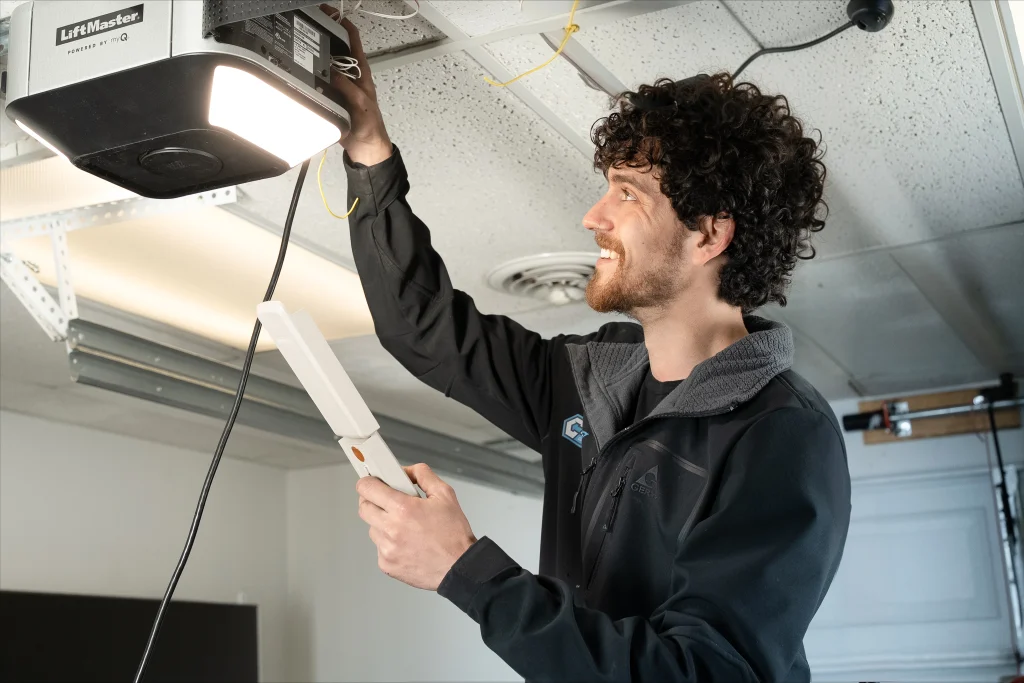
Garage door opener problems in Banks tend to follow a pretty predictable pattern, and most of them come down to a handful of components that wear out over time. Grinding gears are almost always the plastic drive gear inside the opener head wearing against the worm gear, and in many cases replacing that gear set costs a fraction of a new unit, so repair makes good sense. A door that reverses before fully closing usually points to the down-force sensitivity setting being too high or the safety sensors being out of alignment, both of which we can adjust in minutes. Remote failure often means dead batteries first, but if new batteries do not fix it, the logic board or receiver module may need to be swapped out. A wall button that stops responding is commonly a broken wire in the low-voltage cable running from the opener to the button, or a failed button itself, both easy fixes. We generally recommend replacing the whole opener when the motor is burned out, the logic board fails on a unit older than 15 years, or repair costs would run more than half the price of a new opener, at which point Banks homeowners are better off with updated safety features and a fresh warranty.
A routine garage door tune-up covers more than most homeowners in Banks expect when they first call us. During a maintenance visit, we run a balance test by disconnecting the opener and checking whether the door stays level when held at mid-point, because an unbalanced door puts extra strain on the opener motor and can burn it out faster. We lubricate the rollers, hinges, and trac brackets with a lithium-based grease rather than WD-40, which actually dries out moving parts over time. We also inspect the lift cables for fraying near the drum and bottom brackets, check that the photo-eye sensors are aligned within a few millimeters of each other, and go through every bolt and lag screw on the track mounting hardware since vibration loosens them gradually. Most manufacturers recommend scheduling this service once a year, though doors getting heavy daily use benefit from every six months. Catching a worn cable early, a roller with a cracked nylon wheel, or a slightly bent track section keeps a minor fix from turning into a full cable replacement or a door that comes off the track entirely, which is a much bigger job for Banks homeowners to deal with.
A snapped torsion spring is one of the most common reasons Banks homeowners find themselves locked out of their own garage, and it can happen without warning right before you need to leave for work. When the spring breaks, the door loses its counterbalance and the motor alone cannot lift the weight safely, which is why the opener stalls or the door drops partway and stops. If your car is trapped inside, you can pull the red emergency release cord hanging from the trolley on the rail, which disconnects the door from the opener and lets you lift it manually, but with a broken spring the door will be extremely heavy and you should have someone help you hold it while you back the vehicle out. Once the car is clear, leave the door down and do not attempt to operate it again until the spring is replaced, because a single broken spring on a two-spring system puts dangerous stress on the remaining cable drums and bottom brackets. Century Garage Door takes urgent calls for exactly this kind of situation and can typically get a technician to your location in Banks the same day to install the correct spring size, re-tension the cables, and test the door balance before leaving. Skipping the repair or rigging the door open overnight creates a real security problem and puts extra strain on hardware that is already under stress, so the faster the spring is swapped out, the better.
Starting garage door repair services in Banks, OR is simple with Century Garage Door. We collect important details about your garage door system so our team can deliver reliable and professional service for your home.
A detailed diagnostic inspection allows our technician to understand the condition of your garage door. Century Garage Door delivers reliable garage door repair services in Banks, OR supported by precise system evaluation.
Century Garage Door explains how the repair will improve the performance and safety of your garage door. Homeowners in Banks, OR receive professional garage door repair services built on transparency.
Century Garage Door performs the repair work required to restore proper garage door operation in Banks, OR. Our technician ensures the system moves smoothly and safely once repairs are completed.
Century Garage Door performs a final function check after garage door repair services in Banks, OR. This step confirms the door opens and closes smoothly and safely.
When your garage door needs more than two repairs in a single year, or when panels are cracked, severely dented, or the bottom sections are rotting out, it usually makes more sense to replace the whole unit than to keep patching it. At Century Garage Door, we walk Banks homeowners through three main door materials: steel doors are durable and low-maintenance but can dent from impact, wood composite doors give you that classic look with better dimensional stability than solid wood, and aluminum doors are lightweight and work well for wide openings where a heavier door would stress the opener and hardware. Insulation matters a lot for attached garages because a door with an R-value of 12 to 18 will help keep your living space more comfortable and reduce the load on your HVAC system, while a basic non-insulated door might have an R-value as low as 2. On installation day, our crew removes the old door section by section, pulls the existing tracks and spring hardware, and installs the new tracks, drums, and torsion spring assembly before hanging the new panels from the bottom section up. We finish by setting the spring tension, connecting the opener, and running through the full safety reversal test to make sure the auto-reverse trips correctly before we leave your Banks property.
Keeping your garage door operating safely comes down to a few simple checks that every homeowner in Banks can perform, plus knowing when to call a professional. To test your auto-reverse sensors, place a 2×4 flat on the ground in the door’s path and press the close button – the door should hit the board and immediately reverse, and if it doesn’t, the sensor alignment or sensitivity needs attention. The manual release cord, usually a red handle hanging from the trolley, should pull smoothly and allow you to lift the door by hand without it feeling lopsided or heavy on one side. For a basic balance test, disconnect the opener using that same red cord and lift the door manually to about waist height, then let go – a properly balanced door should stay in place or move only slightly, because if it drops or shoots upward, the springs are out of adjustment and need professional service. Pinch-resistant panels have a specific finger-guard profile built into each section joint, so if your door has older flat-edge sections, that’s a real injury risk worth addressing. Sensor recalibration goes beyond wiping the lenses clean – when a door reverses randomly, blinks the opener light, or won’t close even with clear sensors, the alignment brackets may have shifted and a technician serving Banks should realign and test the full safety system properly.