


Response
Rated
Guaranteed










Century Garage Door handles the full spectrum of garage door repairs for homeowners and businesses throughout River Road, from snapped torsion springs and frayed lift cables to worn rollers that grind and skip along the track. When a broken spring leaves your door dead in the water, our technicians swap out the damaged coil and recalibrate the tension so the door lifts and lowers at the right speed without straining the opener motor. We also replace bent or misaligned track sections, swap out cracked and dented panels, and recalibrate or replace safety sensors when they blink out and prevent the door from closing properly. Customers near the River Road area shopping corridors call us regularly for opener repairs and full unit replacements, whether the problem is a stripped drive gear, a burned-out motor board, or a remote receiver that stopped communicating with the wall button. Every job ends with a full cycle test so we can confirm the springs, cables, rollers, and opener are all working together before we pack up and leave.
Homeowners across River Road run into the same garage door failures time and again, and most of them trace back to a handful of specific components. Torsion springs sit above the door on a steel shaft, and when one snaps, the door becomes dead weight that the opener motor cannot lift, often straining the motor or stripping the drive gear in the process. Lift cables run from the bottom corners of the door up to the drum, and when a cable frays or snaps, one side of the door drops lower than the other, causing the panels to bind against the tracks and sometimes jump the rollers entirely. Off-track doors happen when a roller pops out of the vertical or horizontal track section, usually after the door takes a hard impact or a bottom bracket cracks loose, and forcing the door open or closed at that point bends the track and makes the repair more involved. Garage door openers fail for different reasons, including a burned-out capacitor, worn trolley carriage, or a logic board that stops sending signals to the motor unit. Century Garage Door technicians working River Road see these problems daily and know exactly which parts to check first, saving homeowners the time of a guesswork diagnosis.
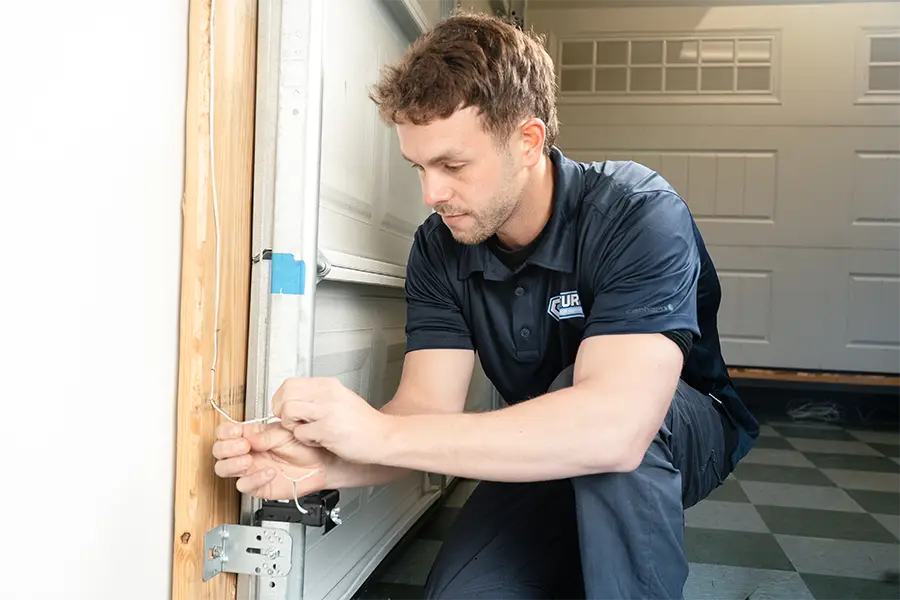
Garage door spring and cable repairs are among the most common service calls Century Garage Door handles for River Road homeowners, and knowing the warning signs early can save you from a fully stuck door. The two main spring types are torsion springs, which mount horizontally above the door on a metal shaft, and extension springs, which run along the tracks on either side of the door – each system has its own cable configuration and failure points. When a torsion spring breaks, you usually hear a loud bang from the garage, and the door suddenly feels like it weighs several hundred pounds because the spring counterbalance is gone – extension spring failures often leave cables visibly loose, coiled on the floor, or hanging off the drum. These repairs are genuinely dangerous for homeowners to attempt because torsion springs store a significant amount of mechanical tension, and releasing that tension incorrectly can cause the spring or cable to snap back with serious force. When a Century Garage Door technician arrives, they start by securing the door in place, then they release any remaining tension from the old spring using winding bars in controlled quarter-turn increments, remove the broken spring from the shaft, thread the new spring into position, and wind it to the correct tension based on the door weight before re-threading and tensioning the lift cables on both drums. River Road residents can call us directly to get the right parts ordered and the job done safely the first time.
Garage door opener problems in River Road homes usually come down to a handful of specific issues that our technicians at Century Garage Door see regularly. Grinding gears almost always point to the plastic drive gear inside the opener head wearing down, which we can replace without swapping out the whole unit if the motor and circuit board are still good. A door that reverses before fully closing typically means the close-force adjustment or the travel limit settings need recalibration, though we also check the safety sensor alignment and wiring at the sensor eyes since a misaligned sensor will trigger the same symptom. Remote failures get diagnosed by testing the frequency, checking for a fried logic board, and confirming the remote itself is not the problem by trying a fresh battery and a reset cycle. Wall button issues usually trace back to a broken wire run along the door track, a failed button switch, or a blown terminal on the control board. For River Road customers deciding between repair and replacement, a good rule of thumb is that if the motor runs, the circuit board responds, and only one mechanical part has failed, repair makes financial sense, but if the board is dead, the motor hums without turning, and the unit is over 15 years old, a new opener is almost always the better call.
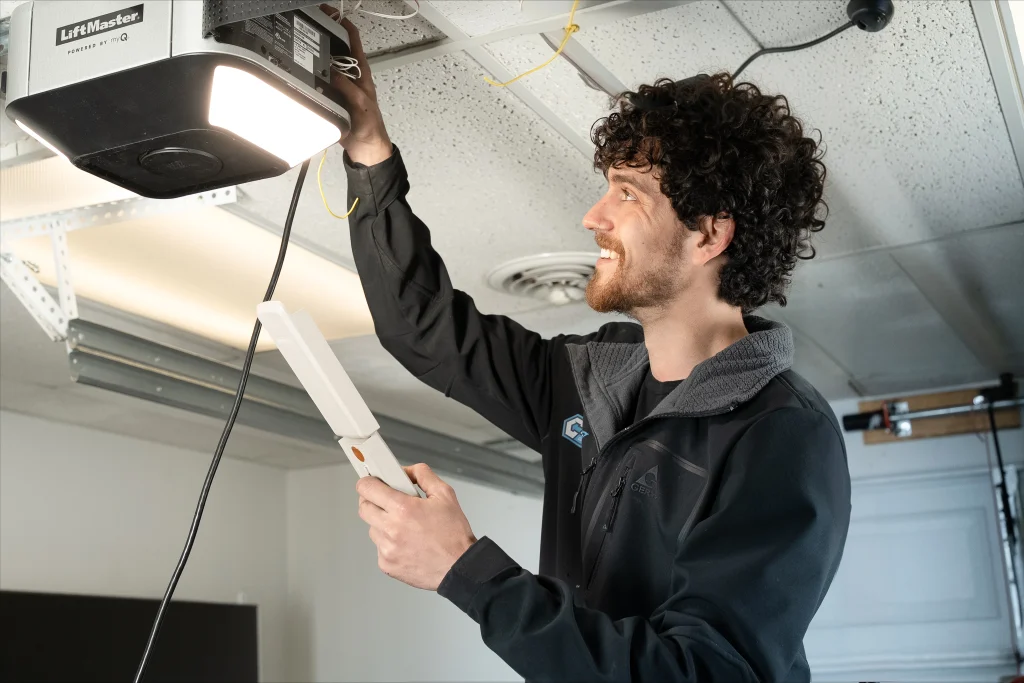
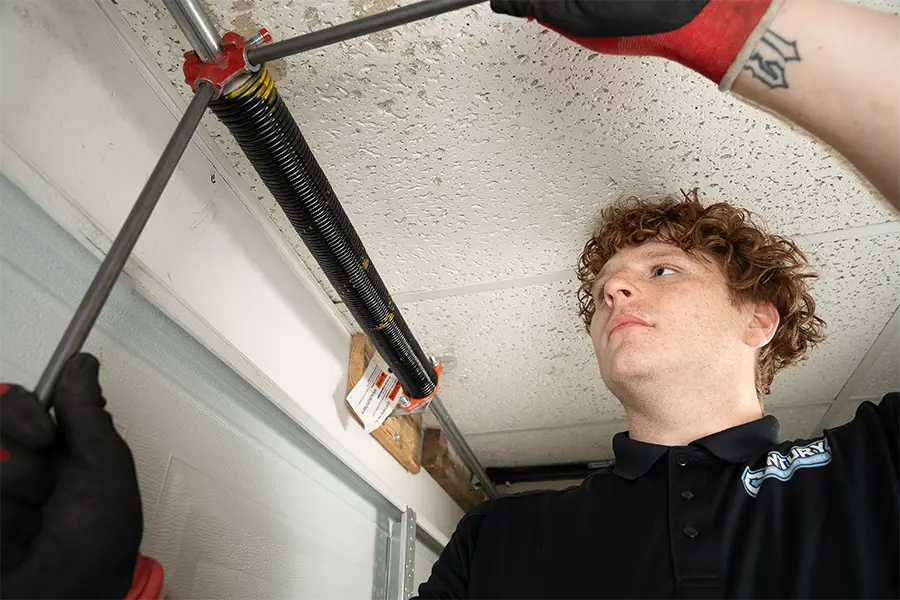
A garage door tune-up from Century Garage Door covers more ground than most River Road homeowners expect when they first schedule one. The technician runs a balance test by disconnecting the opener and manually lifting the door halfway to check if the springs are holding it level, then lubricates the rollers, hinges, and bearing plates with a dedicated garage door lubricant rather than WD-40, which actually strips grease over time. The cables get inspected along their full length for fraying or kinking near the drum, the safety sensors are realigned so the beam crosses cleanly at a consistent height, and every bolt on the track brackets and hinge plates gets checked for tightness since vibration loosens hardware over thousands of cycles. Most homeowners in River Road do well scheduling a tune-up once a year, though doors running two or more cycles daily benefit from a check every six months. Catching problems at this stage means a technician finds a cable starting to fray before it snaps, spots a roller cracking before it jumps the track, and notices a spring losing tension before it fails completely and leaves the door stuck shut.
A snapped torsion spring is one of the most common reasons River Road homeowners find their car trapped in the garage right before work, and it requires immediate attention because trying to force the door up without that spring can damage the opener motor or bend the tracks. If you are stuck and need to get out manually, pull the red emergency release cord hanging from the trolley on the rail – this disconnects the door from the opener so you can lift it by hand, but be aware that without a functioning spring the door will feel extremely heavy and may not stay up on its own, so prop it with a ladder or a piece of lumber before driving out. Never leave a door in that position overnight, because a door sitting open with a broken spring and no support is a safety hazard and can come down suddenly. Century Garage Door handles urgent calls throughout River Road and will diagnose whether the problem is a broken torsion spring, a snapped cable, or a stripped opener gear – all of which show similar symptoms but need different repairs. When you call us after hours for an emergency, a technician will confirm the parts needed over the phone based on your description and arrive with standard spring sizes and cables already on the truck to get the repair done in a single visit.
Starting garage door repair services in River Road, OR is simple with Century Garage Door. We collect important details about your garage door system so our team can deliver reliable and professional service for your home.
A detailed diagnostic inspection allows our technician to understand the condition of your garage door. Century Garage Door delivers reliable garage door repair services in River Road, OR supported by precise system evaluation.
Century Garage Door explains how the repair will improve the performance and safety of your garage door. Homeowners in River Road, OR receive professional garage door repair services built on transparency.
Century Garage Door performs the repair work required to restore proper garage door operation in River Road, OR. Our technician ensures the system moves smoothly and safely once repairs are completed.
Century Garage Door performs a final function check after garage door repair services in River Road, OR. This step confirms the door opens and closes smoothly and safely.
When a garage door needs more than two or three service calls in a single year, or when the panels are visibly cracked, warped, or dented beyond a surface repair, replacement usually makes more financial sense than continuing to patch the same door. At Century Garage Door, we walk River Road homeowners through three main material choices: steel doors are the most durable and lowest maintenance option, wood composite doors give you the look of real wood without the weight and splitting that comes with solid wood panels, and aluminum doors are lightweight and a solid pick for oversized openings where a heavier door would strain the spring system. Insulation matters more than most people expect – a door with an R-value of 12 to 18 uses a polyurethane foam core injected between two steel skins, which holds interior garage temperatures steadier and reduces noise transmission compared to a basic polystyrene-backed door rated around R-6. On installation day, the crew starts by removing the old door panels, tracks, and springs, then installs the new track system and bottom bracket hardware before hanging the new panels section by section and tensioning the torsion spring to the correct turns based on door weight. Most full replacements on a standard River Road single-car or two-car garage are finished in three to four hours, and the installer will run a full safety reversal test on the opener before leaving the job.
Keeping your garage door safe starts with a few checks any River Road homeowner can do themselves, plus knowing when to call a technician. To test your auto-reverse sensors, place a 2×4 flat on the ground in the door’s path and press the close button – if the door doesn’t reverse immediately on contact, the sensor alignment or wiring needs attention from a pro. The manual release cord, usually a red handle hanging from the trolley, should be pulled smoothly to disconnect the door from the opener so you can move it by hand during a power outage, but if it feels stiff or the door won’t stay up on its own after release, the springs are likely out of balance. A simple balance test involves pulling that same cord, lifting the door manually to about waist height, and letting go – a properly balanced door holds its position, while one that drops or shoots up has spring tension that needs professional adjustment. Pinch-resistant panel sections have a specific finger-guard joint design that prevents skin from getting caught between sections, so if your panels are older and flat-edged, a replacement upgrade is worth discussing with a technician. Sensors that are properly aligned one week can drift out of calibration after repeated impacts to the door frame or foundation settling, and River Road homes with older tracks especially benefit from a yearly sensor check by a qualified garage door technician.