New Garage Doors / Materials

Materials guide

Garage door materials: how to choose

Two doors can look the same from the curb and behave very differently over the years. The material decides how the door handles a stray basketball, a humid summer, salt air or a hard freeze.

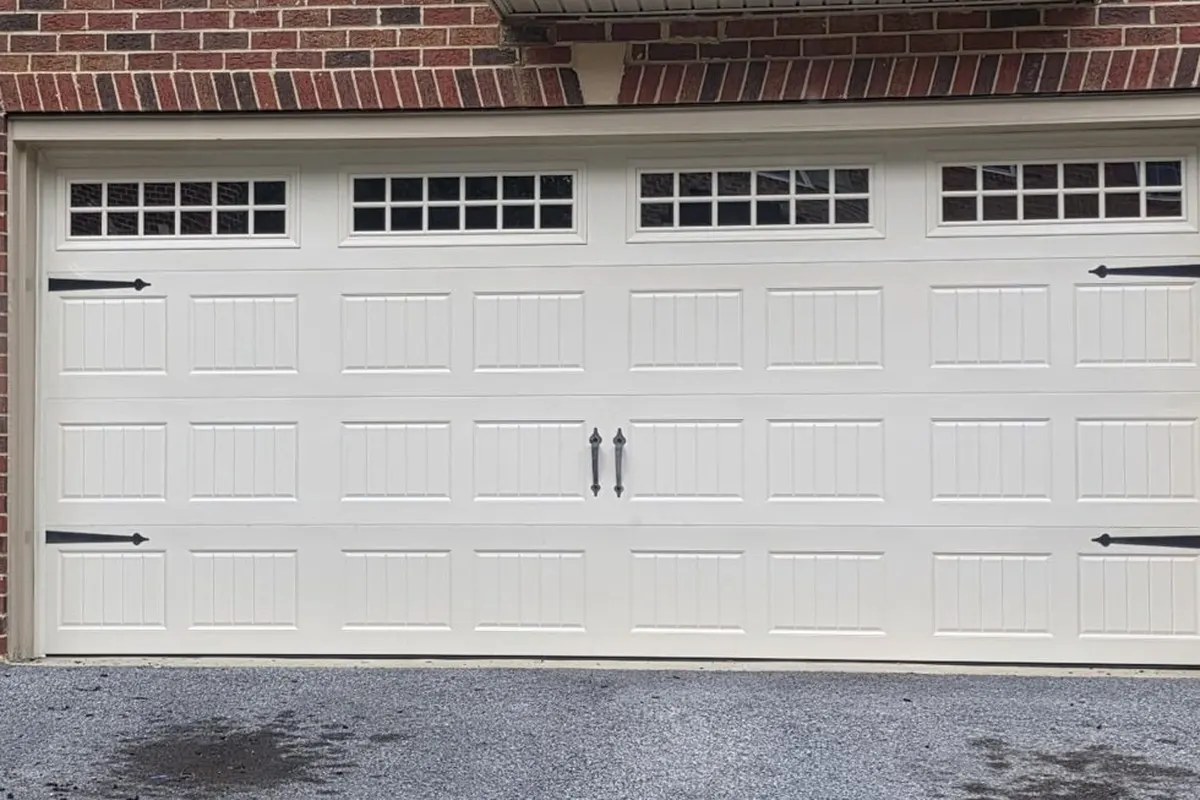
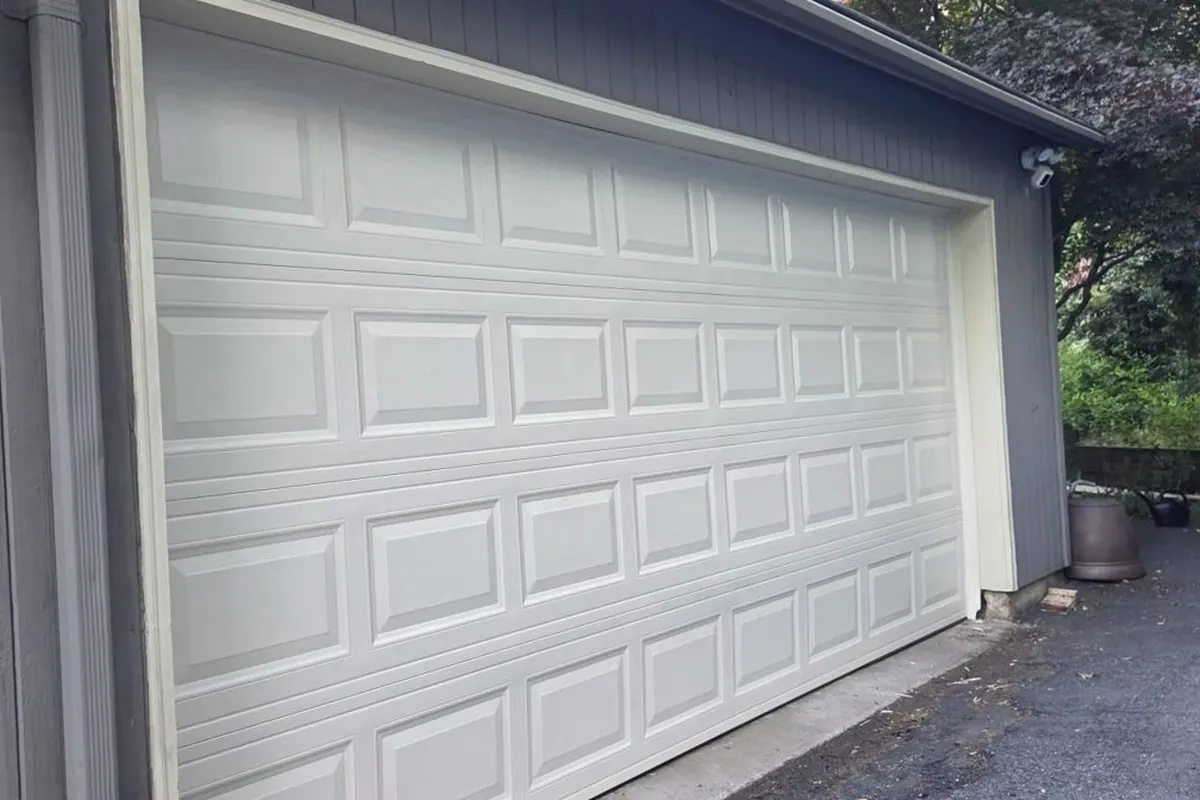
White raised-panel steel double garage door beside a driveway

Steel

The most common residential material: strong, galvanized with a baked-on finish, and available with a wood-grain look.

Gauge, explained. The scale runs backward: a lower gauge number means thicker steel, and thicker steel resists dents better.
Pros
  • Strong, low upkeep
  • Every style, insulated options
Cons
  • Thin gauges dent
  • Rust if scratches are left near salt water

Steel garage doors →

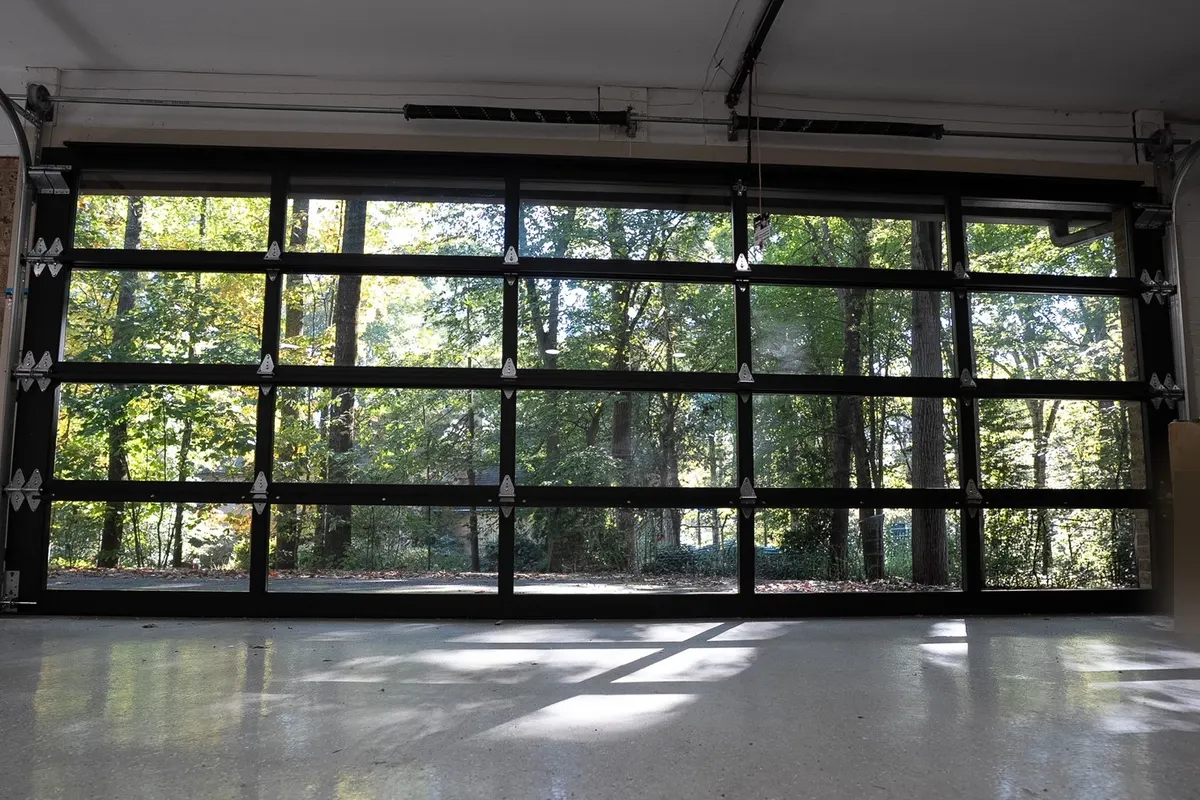
Torsion springs on the shaft above a full-view glass garage door, seen from inside

Insulation and R-value

Single layer, two layer (insulation on the back) or three layer (sandwich between two skins). Polyurethane foam usually insulates more per inch than polystyrene and stiffens the door.

Read R-values carefully. Many describe the insulated section, not the installed door. Calculated and tested numbers are not always comparable. A worn bottom seal lets drafts in no matter the foam.

Insulation garage doors →

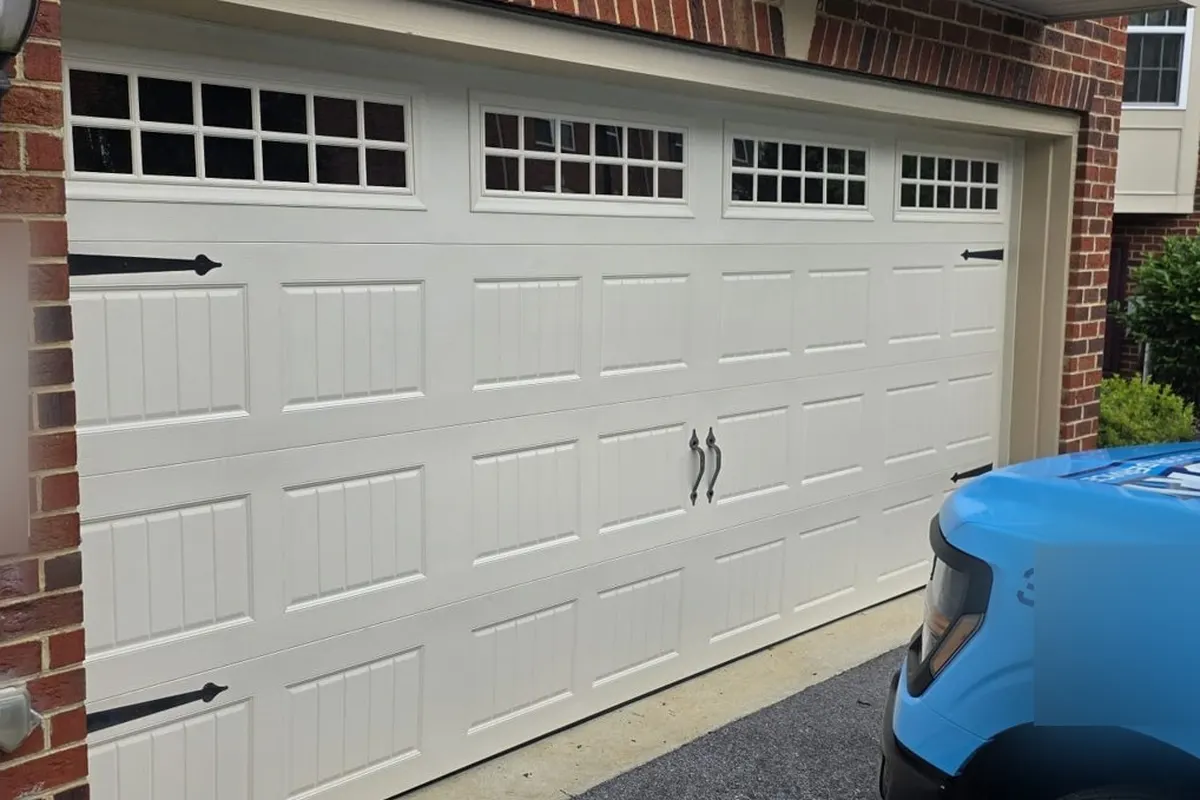
White carriage-style double garage door with decorative handles and window inserts

Wood

Warmth and character other materials imitate. Can be stained, painted or custom built.

Pros
  • Rich, natural look
  • Custom designs, refinishable
Cons
  • Needs regular sealing or paint
  • Can warp or rot, and it is heavy

Wood garage doors → · Wood look garage doors →

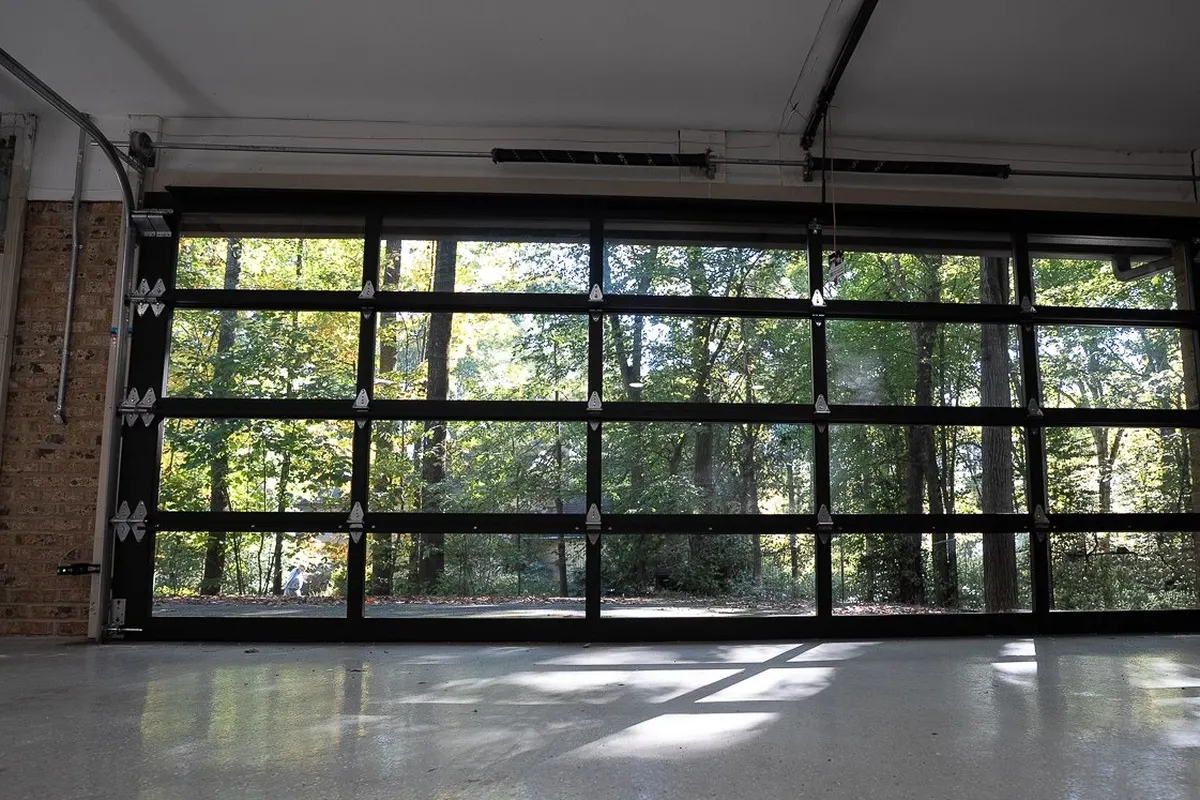
Full-view glass garage door seen from inside the garage

Aluminum

Light and rust-free. The usual frame for full-view glass doors.

Pros
  • Less strain on springs and opener
  • Great for coastal homes
Cons
  • Dents more easily than steel
  • Insulates poorly unless built for it

Aluminum garage doors →

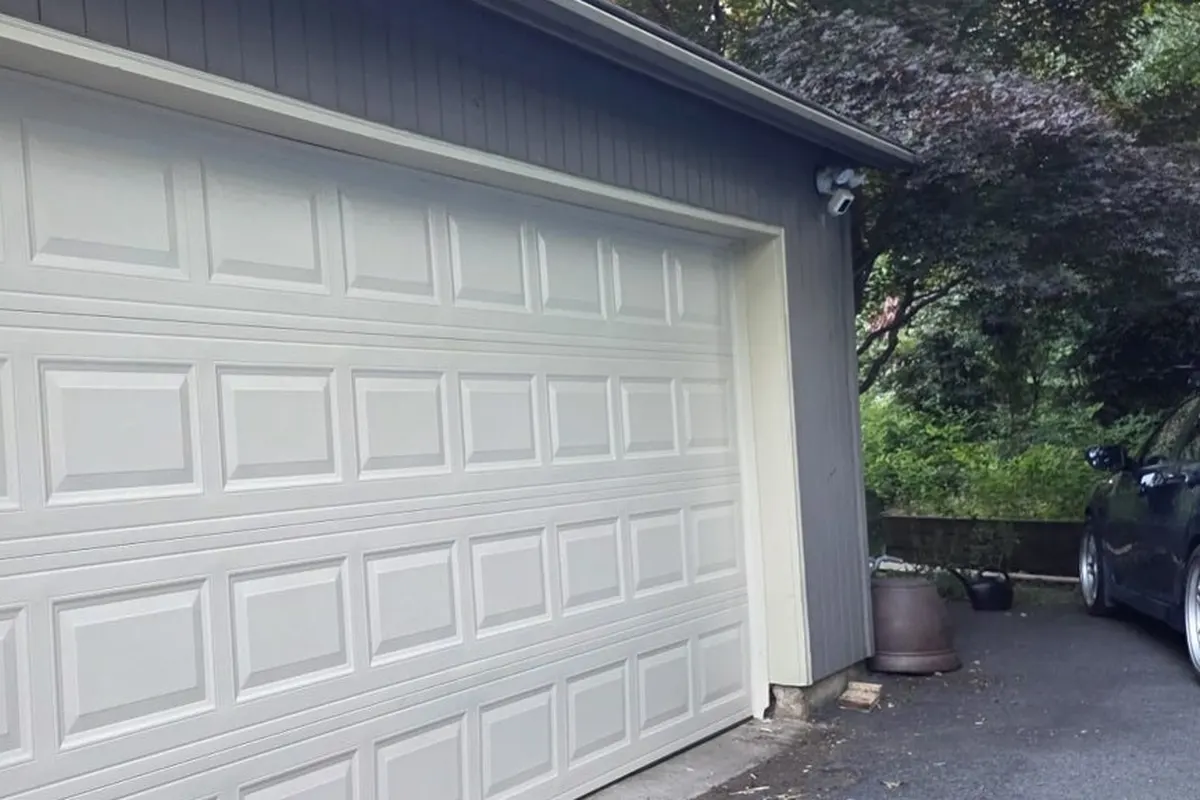
White raised-panel steel double garage door beside a driveway

Vinyl and glass

Vinyl shrugs off dents and never rusts. Glass doors fill the garage with daylight and use tempered or safety glass.

Pros
  • Vinyl: kid-proof, coastal-proof
  • Glass: striking modern look
Cons
  • Vinyl: fewer styles and colors
  • Glass: privacy, cost, cleaning

Vinyl garage doors → · Glass garage doors →

Which material fits your climate?

  • Coastal and salt air: aluminum, vinyl, fiberglass and composite hold up best.
  • Humid and rainy: skip unprotected wood. Finished steel, composite, fiberglass or vinyl.
  • Hot and sunny: Hot and sunny: lighter colors stay cooler and fade less, and insulated steel helps an attached garage.
  • Cold winters: insulated steel with good weatherstripping makes the biggest difference.
FAQ

Garage door material questions

What is the best garage door material?

There isn't one best material for every home. Steel is the practical all-rounder, wood is the richest look, glass and aluminum suit modern homes, and fiberglass and vinyl keep upkeep low. The best choice fits your house, your climate and how you use the garage.

Which garage door material lasts longest?

How long any door lasts depends mostly on how it's installed, balanced and looked after. A well-installed steel, fiberglass or vinyl door with a yearly tune-up will serve you for a long time.

Do you repair doors made of every material?

Yes. We repair springs, cables, rollers, hinges, track, sections and openers on steel, wood, glass, aluminum, fiberglass and vinyl doors. Once a spring is broken, do not run the opener. Leave the door where it is and call a technician.

Which garage door material insulates best?

Insulated steel with a polyurethane foam core usually gives the highest R-value. Wood and fiberglass insulate moderately, and single-layer steel or aluminum with glass the least.

Which garage door material needs the least maintenance?

Steel and vinyl need the least care, an occasional wash and a check of the bottom seal. Wood needs the most, with regular sealing or painting.

Which garage door material is best near the coast?

Aluminum, fiberglass and vinyl handle salt air well because they don't rust. Steel doors work too if the finish stays intact, and every door's springs and hardware need checking more often by the sea.

Which garage door material costs the least?

Single-layer steel usually costs the least. Insulated steel, aluminum, fiberglass and wood cost progressively more, depending on size and style. We quote your exact door in writing.

Book Online Service

For quick response Call: (833) 435-4540

How should we reach you?

Where are you?

Enter your zip or postal code so we can check if we service in your area.

Type of Property

Type of Service

Urgency