
Garage Door Opener Remote Repair, Programming & Replacement
A garage door opener remote is a small piece of hardware, but it carries a lot of weight in your day. When it stops talking to the motor unit, you are standing in the driveway pushing a button that doesn’t work. You are getting out of the car in the rain to lift a door by hand. Century Garage Door Service doesn’t guess at one part and hope; we diagnose and repair the whole chain — the remote, the receiver inside the opener, the antenna and the wall controller. We specialize in LiftMaster, Genie, Chamberlain, Craftsman, Clopay, Amarr, Wayne Dalton and Overhead Door systems.
- Programming, re-programming and memory wiping for all major brands of opener
- Garage door remote replacement, including universal remotes to match your logic board
- Wall control and antenna/receiver diagnosis — not just a new remote sold at the door
Before any part is ordered or replaced, consult a technician about your opener model.
Request an Estimate
We’ll get back to you within 15 minutes.
Who Really Comes To Your House
There is a difference between a garage door company and a lead broker, and most homeowners only find out after the invoice. You contact a lead broker, who sells your address to the highest-bidding contractor that hour and then disappears from the transaction. Century Garage Door Service is the company that answers the phone, and the company that gets the job done. Our technician will be the one to diagnose your remote garage door opener, and if something needs to be revisited you call the same number you called the first time.
We begin our process over the phone. We’re looking for your opener brand, the color of the learn button and roughly how old the unit is, because those three answers narrow the problem before anyone drives anywhere. On site, the technician tests the transmission of the remote, checks the receiver response at the motor head, confirms the antenna wire is intact and undamaged, and tests the wall control on the same circuit. You are told what failed, what it costs and what your options are. Nothing gets replaced until you say yes.
The vans are stocked with programmable and universal remotes for LiftMaster, Genie, Chamberlain, Craftsman, Wayne Dalton and Overhead Door systems, keypads, wall controllers, replacement antennas, logic boards for common models, and the batteries that end up being needed on half these calls. The parts matter, because a garage door remote replacement that needs a second visit for a part is a repair that costs you double.
What The Repair Looks Like
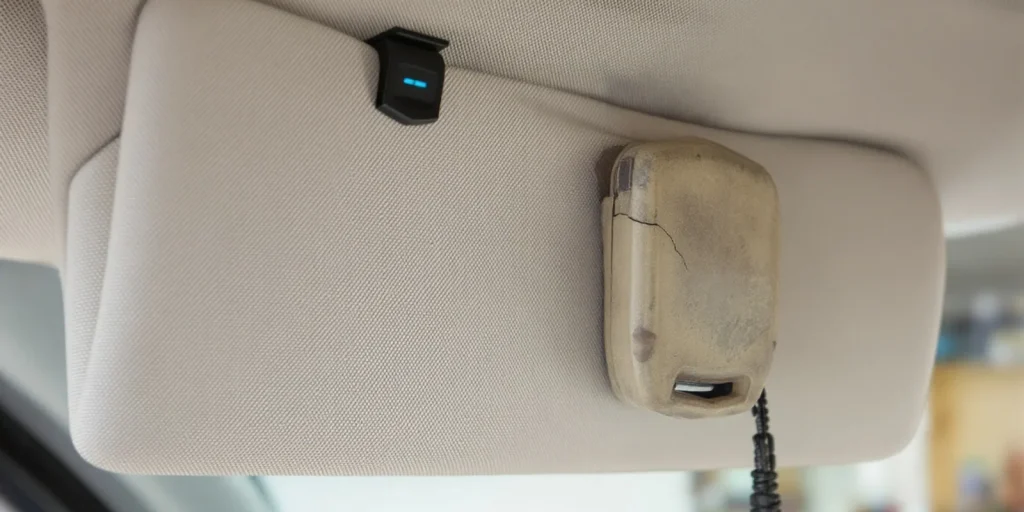
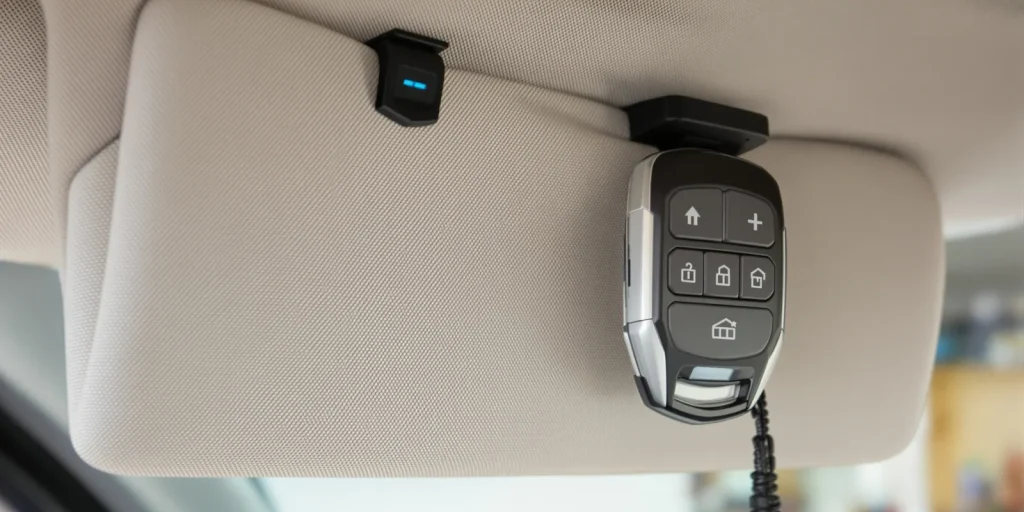
Left: a fifteen-year-old remote with battery corrosion that ate through the contacts. The opener was never the problem. Right: replacement remote programmed at the motor unit and range-tested from the driveway end, before the technician left.
Garage Door Remotes: What Goes Bad And How We Handle It
Nearly every complaint you get from a remote boils down to one of four things: power, memory, reception or hardware. The symptoms are too similar to guess without cost. This is what we actually find, and what the fix is in each instance.
Remote Does Nothing At All
First suspect is the battery, and it is right more often than people expect, especially in climates that swing hot and humid. But putting a new battery in a corroded housing doesn’t help — once the contacts have oxidized, the circuit never closes. We check voltage on a load, not just battery voltage. We check the contacts and the board inside the garage remote. We check to see if the transmitter is actually sending anything. Replacement is the honest answer if the housing is cracked or damaged by water and the remote is truly dead.
The Remote Lost Its Programming
Openers forget. A power surge, a nearby lightning strike, a logic board that’s beginning to fail, or someone holding down the learn button too long and erasing the memory will all result in a garage door opener remote that used to work and now does not. If the opener is healthy, reprogramming takes minutes. When a remote will not hold its programming — it works today, forgets by Thursday, works again after a reprogram — the logic board’s memory chip is failing, and we test for that rather than reprogramming the same remote over and over.
Remote Only Works From A Few Feet Away
Nine times out of ten, a short range is a reception problem, not a transmitter problem. The wire antenna hanging from the motor unit is tucked up out of sight during a garage cleanout, cut by a previous installer, or corroded at the terminal. LED bulbs are another common culprit — many cheap LED and CFL bulbs broadcast interference out over the entire frequency your garage door remote control uses. We step through the range tests, locate the source of the interference, swap or reroute the antenna and verify the door works where you actually park.
Remote Is Missing, Broken Or Discontinued
If a remote, however, is lost rather than broken, the security fix is to completely wipe the opener’s memory and reprogram every other remote and keypad so the lost unit no longer opens your garage. If the model is no longer made — as is often the case with Genie, Craftsman and older Overhead Door remote systems — a universal garage door remote programmed to the same frequency and rolling-code generation as your opener will work. Universal does not mean it works with everything, and we confirm compatibility with your logic board before we fit one, not after.
Repair Or Replace: What Makes Sense For Your Garage Door Opener
Not every remote fault calls for a new opener, and not every old opener deserves another repair. The line is generally the age of the logic board and if your system uses rolling-code security. Here’s how the two pathways compare.
Fix Or Replace The Remote
-
The correct call when the opener is good and only the handheld unit or its programming has failed.
-
Change batteries, clean contacts and range test your current garage opener remote
-
Reprogramming to the motor unit, including clearing of memory following loss or theft of a remote
-
Garage door opener remote replacement with a universal or brand-matched remote
-
Antenna repair or re-routing, plus interference diagnosis from LED lights and nearby electronics
Replace The Opener System
-
Particularly if the logic board is failing or the unit is pre-rolling-code security.
-
Openers that will not support programming as the memory chip is degrading
-
Fixed-code units from before 1993, where any matching transmitter opens your door
-
Systems where the logic board to be replaced costs almost as much as a new opener
-
New installs include new remotes, a keypad option and warranty on the whole assembly
How To Program A Garage Door Opener Remote Yourself
This one you will be able to do really well. Most units take five minutes to program or reprogram a garage door opener. There is no spring, cable or moving door panel. The following steps will guide you through how to program a garage door remote on most modern openers. If you get to step five and it still won’t take, it’s the opener, not your technique.
-
1
Find the learn button and identify your opener.
Find the brand and, if possible, the model number on the label on the motor unit. Next locate the learn button, which is usually found on the back or side of the motor head, often hidden under a light cover or a small plastic panel. Color matters: yellow, purple, red-orange, green and gray buttons represent different rolling-code generations, and that color will tell you which replacement garage door remote will work with the unit.
-
2
Get set up safely before you climb.
Stand on a proper step ladder on a level surface, with the ladder set so you can reach the motor unit without overstretching sideways. Don’t stand on the roof of your car, a workbench or a pile of storage bins. First, clear the area under the opener. If you need both hands, get someone to steady the ladder.
-
3
Press the learn button and then the remote.
Press and then release the learn button — a short press, not a hold. There will be an LED next to it that will turn on or start blinking, and you’ve got about thirty seconds. Inside that window, press and hold the button on your garage remote control for 2 to 3 seconds. The opener lights will flash or the unit will click once to indicate that it accepted the code.
-
4
Test from where you really use it.
First, open the garage door using the remote from inside the garage to see if it responds. Then test from your car at the end of your driveway and from the street. A remote that works at three feet and fails at thirty is a reception problem worth reporting — not a successful program.
-
5
If it doesn’t work, erase memory and start over.
Hold the learn button until the LED turns off — generally six to ten seconds. This wipes out all remotes, keypads and garage door controllers programmed into the opener, so you will have to program them all again, not just the new one. It’s also the right thing to do if the remote was stolen or lost. Reprogram each unit with steps 3 and 4. If a remote still does not work after a full memory clear, the logic board or receiver is bad.
DIY done — stop here.
Programming a remote is safe. Chasing a remote fault into the door hardware is not. Do not change the force or travel limit settings to “fix” a door that goes in reverse or stops when you push the remote control. These settings determine how much pressure the opener applies before stopping, and if they are adjusted incorrectly, a safety feature on a door that weighs anywhere from 150 to 400 pounds is disabled. No matter what a video tells you, never touch the torsion spring above the door, the cables running down either side, or a door that has come off its track. These parts take the full weight of the door at extreme tension. When they break, they break all at once. This is the part of the system that sends people to the emergency room, and it's not a job that gets safer with care or patience — it needs the right tools and training. Call us, or call somebody, but don't do it yourself. Also, unplug the opener at the ceiling outlet before removing any cover from the motor unit, and keep the door itself closed while anyone is on a ladder under it.
How To Select A Garage Door Company For Remote Work
A homeowner can easily be oversold in this trade on remote and opener calls, because almost no one can independently verify what the technician is saying about a logic board. A company that tells you “you need a brand new opener” before it has tested the remote, the antenna and the wall control has bypassed the diagnosis. Ask what was actually tested, and what the result was. A real answer will be specific — voltage, range in feet, did the receiver LED respond — and a sales pitch will be vague.
Make sure you’re hiring the right person. Look up the phone number you are calling to see if it is a garage door company or a lead generation company. Look for a real business address, the same company name on the website and invoice, and reviews that mention the same company doing the work, not a revolving door of unnamed contractors. Ask if the price you are quoted is the price you will pay, and get the total before the work begins, not after.
Before you agree to anything on a remote or opener call, ask two questions. What exactly did you test to reach that conclusion? What is the total price including parts, labor and any trip charge? If either answer is vague, you have learned what you need to learn.
FAQs About Garage Door Opener Remotes
Will a universal garage door opener remote work with my opener?
Usually, but not always. Most universal garage door remotes work on a variety of frequencies and rolling-code generations, and most units specify the brands and year ranges they’re compatible with. It will not work in two situations: very old fixed-code openers, and certain proprietary systems that will only accept a transmitter from the manufacturer. The easiest way to tell is the color of the learn button on your motor unit. Give us the brand and that color on the phone and we can confirm compatibility before anything is purchased.
Why does my garage door remote only work when I'm right in front of the door?
That’s almost always reception, not transmission. The biggest problems are a broken, loose or hidden antenna wire on the motor unit, and radio interference from LED or CFL bulbs installed in or near the opener. Nearby electronics, a neighbor’s system on the same frequency, and metal storage racking between you and the antenna can all add up. We don’t sell a new remote first, because replacing the remote rarely fixes it, so we test range in stages.
My remote functions properly but the button on the wall does not. Is it the same problem?
No, and that split is actually useful information. The remote talks wirelessly to the opener; the wall control talks to it through a low-voltage wire running down the wall. If the remote functions properly but the wall garage door controller doesn’t, the problem is one of its terminals, the wire, or the wall unit itself — often a staple driven through the wire during a wall repair, or a loose terminal. This is an easy fix and doesn’t mean your opener is going bad.
My remote model is discontinued. Should I get a new opener?
Not on its own. Discontinued remotes are a common problem with older Genie, Craftsman and Overhead Door remote systems. A compatible universal remote or matched keypad will typically restore full function without touching the opener. Another reason to replace the opener is if the logic board is failing, the unit is older than rolling-code security, or the replacement board costs almost as much as a new system.
How many remotes can I have for one opener, and what happens when it's full?
Most residential openers have space for five to eight devices, including remotes, keypads and any built-in car buttons. A full memory silently overwrites the oldest remote. This is why a remote that has worked for years sometimes stops the same week a new one was added. You can fix this by wiping the memory and re-programming everything you actually use. That’s also the right move any time a remote goes missing.
Get Your Remote Working Again
A battery, a wiped memory, a snipped antenna, or a logic board at the end of its life — the fix starts with an accurate diagnosis, not a guess. Century Garage Door Service offers complete opener replacement, receiver and antenna repair, garage door remote replacement and remote programming services for LiftMaster, Genie, Chamberlain, Craftsman, Clopay, Amarr, Wayne Dalton and Overhead Door systems.
When you call, have your opener brand and learn button color ready. It saves time on the diagnosis and gets you a straighter answer on price.
Related Garage Door Services
Garage Door Opener Replacement & Repair
Logic board faults, motor failures, noisy chain drives and complete opener replacements for every major brand.
Keypad & Wall Control Installation
Exterior keypads and interior wall controllers installed, wired and programmed to your existing opener.
Safety Sensor & Photo Eye Repair
Doors that reverse before closing are a common problem, typically caused by misaligned or failed safety eyes.