


Response
Rated
Guaranteed










Century Garage Door handles the full range of garage door repairs for homeowners and businesses around Dayton, including folks near the Dayton Historic District who rely on older systems that need regular attention. When a torsion spring snaps or an extension spring loses tension, the door will stop lifting properly or feel dangerously heavy, and our technicians replace those springs with correctly rated hardware matched to the door weight. We also repair and replace frayed or broken cables, bent tracks that cause the door to bind or jump, worn rollers that grind and slow the movement, and damaged panels that throw off the door alignment. Opener issues are another common call we get in Dayton, whether it is a stripped drive gear, a burned-out motor, or a logic board that needs replacement rather than a full unit swap. Safety sensor problems, like a door that reverses immediately or refuses to close, usually come down to misaligned sensors or dirty lenses, both of which we can diagnose and fix in a single visit.
Homeowners in Dayton call Century Garage Door for the same handful of problems that show up again and again. Torsion springs are the number one culprit – when a spring snaps, the door becomes too heavy to lift manually and the opener motor strains or burns out trying to compensate. Lift cables run along the sides of the door and connect to the bottom brackets, and when a cable frays or snaps, the door drops unevenly and can jump off the horizontal tracks entirely, bending the track itself in the process. A door that has gone off-track will grind and bind against the track rails, and forcing it open or closed makes the damage significantly worse. Garage door openers fail for different reasons – stripped drive gears inside the opener unit, burned-out motor capacitors, or logic board failures that cause the door to reverse unexpectedly or refuse to respond to the wall button and remote. Bent panels are another common issue Dayton residents deal with, usually after a vehicle backs into the door, and even a single bent section throws off the balance because the panels are hinged together and need to flex in a specific path as the door rolls up.
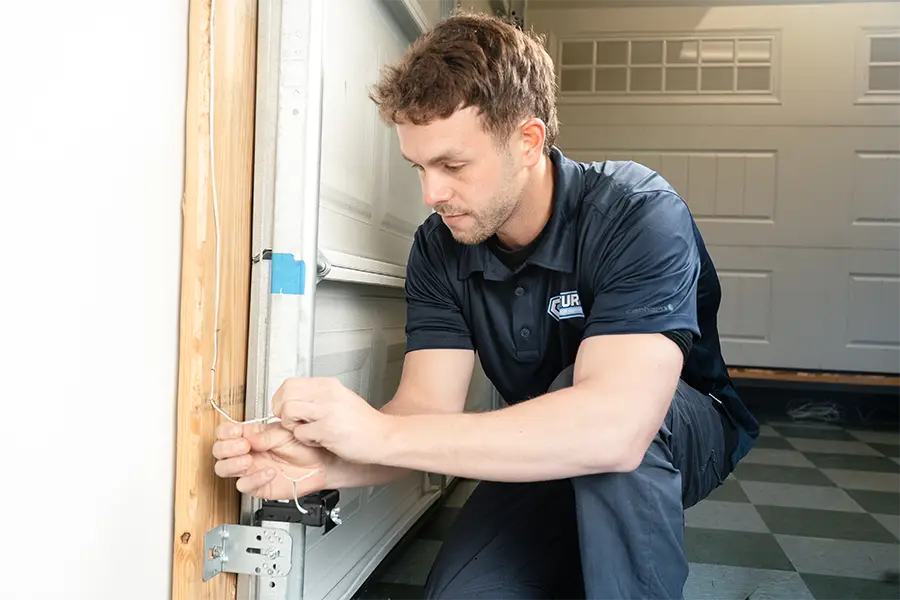
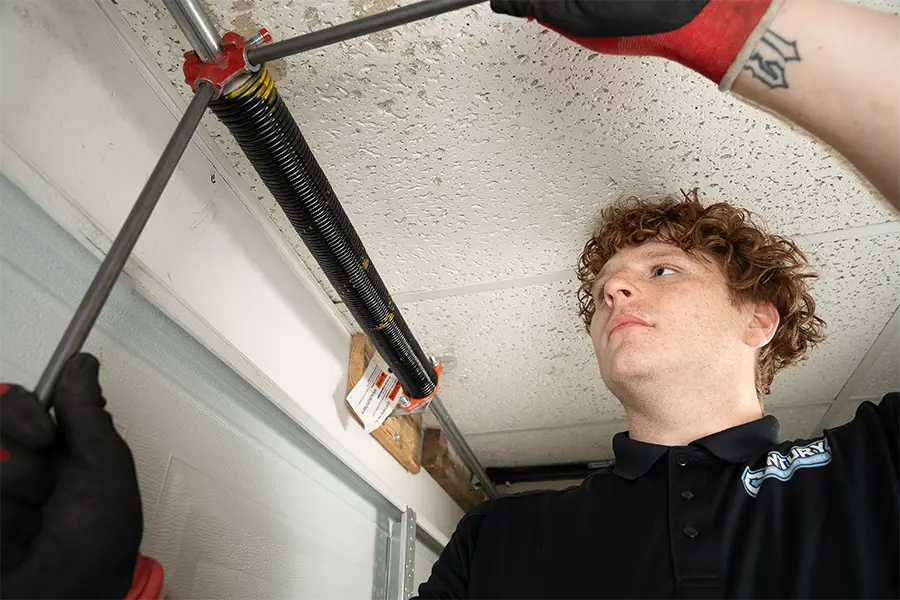
Garage door springs and cables take on serious tension every time your door moves, and when something goes wrong, Dayton homeowners often hear it before they see it – a loud bang that sounds like a gunshot usually means a torsion spring above the door has snapped, while an extension spring failure on either side of the tracks can send cables flopping loose or cause the door to drop unevenly. If your door suddenly feels like it weighs several hundred pounds when you try to lift it manually, or if you notice slack cables hanging off the drum, stop using the door immediately because continuing to operate it can damage the opener motor or let the door free-fall. Century Garage Door technicians do not recommend attempting this repair yourself because torsion springs store enough energy to cause serious injury if they unwind unexpectedly during removal. When a technician arrives, the first step is securing the door in place and releasing any remaining tension from the broken spring using winding bars inserted into the winding cone – then the old spring is slid off the bar, the correct replacement spring is measured and installed, wound to the right number of turns based on door weight, and the cables are re-seated into the drums before the door is tested for proper balance. Whether your Dayton home has a single torsion spring system or a pair of extension springs with safety cables threaded through them, getting the tension calibrated correctly is what keeps the door moving smoothly and safely for years.
Garage door opener problems in Dayton homes usually come down to a handful of specific failures, and knowing what you are dealing with helps avoid unnecessary replacement costs. Grinding gears almost always point to the plastic drive gear that meshes with the motor shaft – this part wears out over time and is typically a straightforward repair with a replacement gear kit. When a door reverses before fully closing, the technician will check the close-limit adjustment screw and test the safety sensors at the bottom of the track, because a misaligned or dirty sensor eye sends a false obstruction signal to the logic board. Remote failure gets diagnosed by first swapping in a fresh battery, then checking the antenna wire hanging from the motor head, and finally testing whether the logic board is receiving the signal – if the board is dead, that changes the repair math significantly. A wall button that does not respond points toward the wiring between the button and the motor unit or a failed button itself, both of which are inexpensive fixes. Repair generally makes sense when the motor, rail, and main circuit board are still functioning – but if a Dayton homeowner is looking at a burned-out motor combined with a failed logic board on a 15-year-old opener, putting that money toward a new unit is usually the better call.
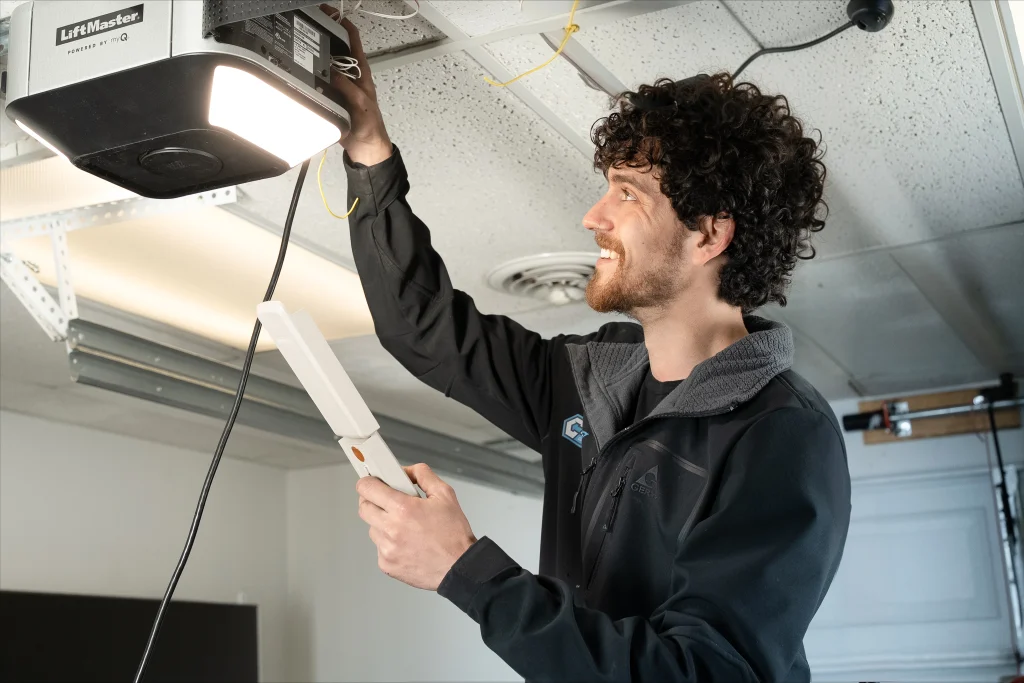
A routine garage door tune-up from Century Garage Door covers several specific checks that most Dayton homeowners overlook until something breaks. During a maintenance visit, a technician will perform a balance test by disconnecting the opener and manually lifting the door halfway to see if it holds steady or drifts, which reveals worn springs before they snap. Every roller and hinge gets a coat of white lithium grease to reduce friction and quiet that grinding noise that tends to get louder over time. The cables are inspected along their full length for fraying or uneven wear near the drum, and the safety sensors at the base of the tracks are tested and realigned if the door hesitates or reverses unexpectedly. All the mounting hardware, including lag bolts, track brackets, and hinge screws, gets checked and tightened because loose fasteners cause the whole system to shift out of alignment. Scheduling a tune-up once a year is generally enough for most Dayton households, and catching a frayed cable or an out-of-balance spring during a routine visit is far less expensive than an emergency repair call after the door stops working entirely.
A snapped torsion spring or a failed opener motor can leave your garage door stuck wide open or trap your car inside at the worst possible time, and knowing what to do in those first few minutes matters. If your door is stuck open and you need to secure it manually, locate the red emergency release cord hanging from the trolley on the rail, pull it down to disengage the opener, then carefully lower the door by hand while keeping your fingers away from the panel joints. Once it is down, clamp locking pliers or a C-clamp onto the track just below the bottom roller to hold it in place until a technician arrives. Do not attempt to reconnect a door with a broken spring to the opener, because running the motor against a door it cannot lift will burn out the drive gear or strip the worm gear inside the motor head. Century Garage Door serves Dayton and the surrounding area and takes urgent calls seriously – when you explain that your door is stuck open, your car is trapped, or a spring just snapped, the team prioritizes same-day scheduling and arrives with torsion springs, cables, and rollers already on the truck so the repair gets finished in one visit.
Starting garage door repair services in Dayton, OR is simple with Century Garage Door. We collect important details about your garage door system so our team can deliver reliable and professional service for your home.
A detailed diagnostic inspection allows our technician to understand the condition of your garage door. Century Garage Door delivers reliable garage door repair services in Dayton, OR supported by precise system evaluation.
Century Garage Door explains how the repair will improve the performance and safety of your garage door. Homeowners in Dayton, OR receive professional garage door repair services built on transparency.
Century Garage Door performs the repair work required to restore proper garage door operation in Dayton, OR. Our technician ensures the system moves smoothly and safely once repairs are completed.
Century Garage Door performs a final function check after garage door repair services in Dayton, OR. This step confirms the door opens and closes smoothly and safely.
When a garage door needs more than two or three service calls a year for broken springs, snapped cables, or panels that keep bending out of alignment, replacement usually costs less over time than continuing to patch the same problems. Century Garage Door helps Dayton homeowners compare three common door materials – steel, wood composite, and aluminum – based on dent resistance, weight load on the opener, and long-term maintenance needs. Steel doors with a polyurethane foam core typically carry an R-value between 12 and 18, which helps the garage hold a steadier temperature if it connects to living space, while aluminum doors with thinner insulation panels usually land in the R-6 to R-10 range and work well for detached garages where energy efficiency is less critical. Wood composite sits in the middle, giving the look of real wood without the warping that solid wood panels can develop over time, and it accepts paint well if you want a custom finish. On installation day, our crew removes the old door sections, tracks, and hardware, checks the header and jambs for any soft spots or rot before mounting the new track system, installs the panels from the bottom section up, then tensions and balances the new springs before connecting the opener and running a full safety reversal test. If you are in Dayton and are not sure whether repair or replacement makes more sense, we can walk through the door’s service history with you and give you a straight cost comparison on the spot.
Keeping your garage door safe starts with a few simple checks that every Dayton homeowner can do between professional visits. To test your auto-reverse sensors, place a 2×4 flat on the ground in the door’s path and hit the close button – the door should reverse within two seconds of contact, and if it doesn’t, the sensor eyes likely need realignment or cleaning. The red manual release cord hanging from the trolley lets you disengage the door from the opener during a power outage, but you should pull it once a year just to confirm it moves freely and the door slides without binding. Pinch-resistant panels have a layered hinge design that limits finger gaps as sections fold together, so if you notice your panels denting inward or the hinge knuckles look worn, those need attention before someone gets hurt. For the balance test, disconnect the opener and manually lift the door to about waist height – a properly balanced door stays in place on its own, while a door that drops or shoots up has spring tension that’s off and should not be adjusted without a professional. Century Garage Door works with Dayton residents regularly on sensor recalibration, which becomes necessary when the LED indicator lights are blinking out of sequence, the sensors have been bumped out of alignment, or the door reverses without any obstruction present.
For quick response Call: (833) 435-4540