
Garage Door Opener Installation Service
You touch one part of your garage door every day, and it is usually the first thing to quit. That is your opener. Century Garage Door Service installs new openers on residential garage doors throughout the area — LiftMaster, Genie, Chamberlain, Craftsman — and we do the unglamorous part right: making sure the door itself is balanced and safe before we bolt a motor to your ceiling. On a badly balanced door, a new opener is a new opener that dies young.
- Sectional and roll up garage door openers installed (belt, chain and wall mount)
- Door balance, tracks and hardware checked before the new unit goes in
- Safety sensors, travel limits and force parameters tested and documented before we leave
You will talk to our office, not a call center that will sell your address to the highest bidder.
Request an Estimate
We’ll get back to you within 15 minutes.
Who Really Comes To Your House
If you are looking for a garage door company, there are two types of names you will find. One is a business with vans and technicians and a phone number that connects you to the people who do the work. The other is a lead broker — a website that gets your info and sells it to whichever contractor is available, sight unseen. Century Garage Door Service is the first. When you call 833-435-4540 you are talking to the company that will be in your driveway.
The process is made to be simple. You tell us what is going on — the opener is dead, it is grinding, it reverses halfway or you are finally replacing a 20 year old unit. We ask what brand it is, roughly how old the door is, and if the door itself moves smoothly by hand. Then a tech comes out and checks the door before touching the opener, and lays out the choices in simple numbers: the cost of a repair, the cost of a new opener, and what we would do if it was our own garage. You choose. Nobody starts ripping parts off your ceiling until you have agreed to a price.
The vans carry the stuff this job really requires: belt-drive and chain-drive opener units, wall-mount jackshaft models for garages with low headroom or storage above the door, rail extensions for 8-foot doors, header brackets, safety sensor kits and brackets, replacement gears and sprockets, capacitors, logic boards for common LiftMaster and Genie models, wall consoles, keypads, remotes, and the wiring, staples and connectors to run it all cleanly instead of leaving a cable draped across your ceiling.
See What A Proper Install Does For You
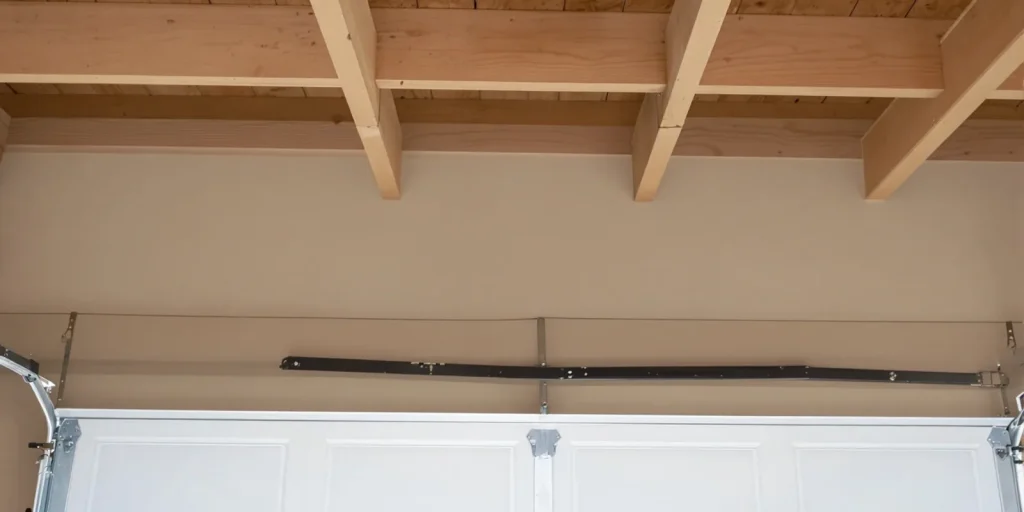
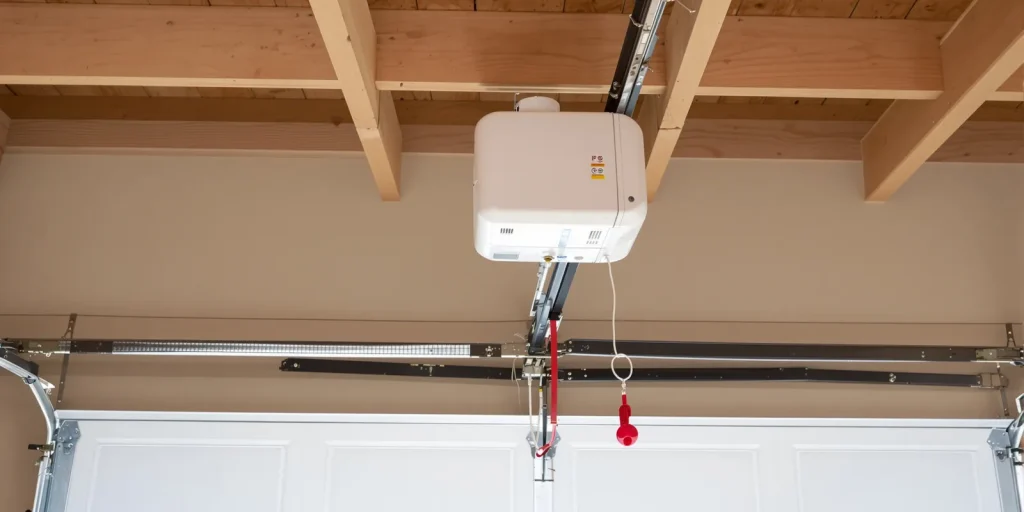
Same garage, same door. The old chain drive had been fighting a door that was out of whack for years, and the safety sensors had been moved up the track to stop the door from reversing — totally defeating the whole point of them. New belt drive unit, door balanced and re-tensioned by technician, sensors back where the manufacturer put them.
The Problem With Garage Door Openers And What We Replace Them With
Most people do not call about installation. They call about a noise, a shudder, or a door that does not close, and installation is where that conversation takes them. That is generally what is behind it, and what a replacement is actually doing.
The unit is old enough that parts do not exist anymore
Openers made before the mid-2000s were good machines, but logic boards, receivers and gear assemblies for them are getting hard to find, and the older units do not have the rolling-code security that prevents someone from cloning your remote from the curb. If a 20-year-old opener fails, garage door opener repair often costs a meaningful fraction of a new unit, and you get an appliance that is already at the end of its life. We will give you the straight skinny on which side of that line you are on.
Chain, belt or wall-mount — drive type is not a preference, it is a fit
Chain drives are more durable and less expensive, fine for a detached garage. Belt drives are quieter, which is important when you have a bedroom over a garage. This is the most common upgrade we install. Wall-mount jackshaft openers bolt beside the torsion shaft instead of hanging from the ceiling, the answer for low headroom, cathedral ceilings, storage racks or heavy insulated doors. Oversized panels and roll up garage doors also change the horsepower we would specify. We size the unit to your door, not whatever was sitting on the shelf.
The door has to be balanced before an opener gets anywhere near it
An opener is provided to assist a door that is carried by its own springs. If the springs are tired, a cable has jumped off, or a garage door track is bent or out of alignment, the motor ends up dragging the full weight of the door — and it will burn out, strip its gear, or trip its force settings long before it should. We start every installation with a balance test and a look at the hardware. We will let you know if something needs fixing before your brand new opener starts to struggle.
Sensors, wiring and the smart features that people actually use
Photo-eye safety sensors need to be within six inches of the floor, aligned and clear — they are what causes a door to stop instead of closing on a bicycle or a kid. We do not build them up to hide a different problem, we mount and line them up correctly. Wiring is run, secured, not just hanging. And if you want the practical extras — Wi-Fi so you can check from your phone if you left it open, a key pad by the side door, battery backup, extra remotes, integrated lighting — we set them up and show you how they work before we pack the van.
Fix The Garage Door Opener Or Buy A New One?
We do not like selling you something you do not need, and not every dead opener needs to be replaced. We would rather fix yours. That is roughly how the decision goes.
Fix Your Garage Door Opener
-
That would be the case for a unit less than about 10 years old and a single component failure.
-
Drive gear or sprocket stripped — a common failure on chain drives and very fixable
-
Bad capacitor, burned logic board, or dead receiver on a model that still has parts available
-
Damaged, misaligned or badly wired safety sensors
-
Broken trolley, loose rail, worn wall console or remotes that no longer pair
New Garage Door Opener Installation
-
Better value if the unit is old, unsupported or has been repaired once already.
-
Motor failure, overheat or housing cracked
-
No rolling-code security, no photo-eye sensors, or parts no longer manufactured
-
You want a quiet belt drive under a bedroom, or a wall-mount unit to free up ceiling space
-
Garage door opener replacement cost is close to a second repair cost
How To Install A Garage Door Opener Yourself And Know When To Quit
If the door is already in good shape, a confident DIYer with a helper, a solid ladder and a full afternoon can install an opener. Installation is mostly bolting and wiring. What kills people is the part before the install. The door and the springs. This is the true progression including when you should put the tools down.
-
1Check the door for balance before you buy anything.
Close the door and disconnect the opener (or before there is an opener). Pull the emergency release cord and lift the door up by hand. Release and it should glide smoothly and stay in position at about waist height. If it drops hard, shoots up or feels heavy, the springs are out of adjustment or inoperative. That is not an opener problem, and no opener will solve it. Stop here and see the safety box below.
-
2Measure your head room and see what you are bolting into.
Standard trolley openers require about two to three inches clearance above the top of the door, plus room for the rail and motor head. Check to make sure the ceiling framing over the door is solid. The motor head must be hung from structural framing, not plasterboard or an unbraced joist. And make sure the header over the door can carry the bracket. If you have low headroom or a finished ceiling, it is usually a wall-mount jackshaft unit instead.
-
3Sort the power before the parts get here.
Openers are designed for a grounded ceiling receptacle close to the motor head. Extension cords are not an acceptable permanent solution. If there is no outlet up there, that is an electrician’s job, and worth booking before your Saturday, not during.
-
4Match the drive and horsepower to the real door.
Think about the material of the door and how high it is. A single-car uninsulated door is not demanding. A double-wide insulated door, a solid wood door or an 8-foot-tall door demands additional capacity and often a rail extension kit which is sold separately. Under-speccing is the most common DIY mistake here, and it manifests itself as a hot-running motor that dies in year three.
-
5Assemble and mount. Set limits and force. Be careful.
Build the rail on the floor, install the header bracket, hang the motor head from the framing with the provided angle iron, attach the door arm, run the wiring for the wall console and the two photo-eye sensors and install those sensors within six inches of the floor. Set the limits of travel and the force settings and test the reversal. Place a solid object flat on the floor in the path of the door, close the door and ensure it reverses on contact. Also break the sensor beam mid-close and check it reverses. If either test fails, the opener is not safe to run and the settings need to be adjusted.
STOP — do not touch springs, cables or a door off its track.
If you failed your balance test, if a spring is broken, if a lift cable is frayed, loose or off its drum, or if the door has jumped its track, the job is not an opener job anymore. Extension and torsion springs store hundreds of pounds of energy..
Released without the right winding bars and technique, they cause broken hands, broken faces and worse — every year, to people who had done plenty of other home repairs successfully. Not for the beginner. Keep the door closed, do not use the opener and call a technician at 833-435-4540
. This is not us protecting a service call. It is the one part of a garage door that actually hurts people.
How To Pick A Garage Door Repair Company
First, find out who owns the phone number. A real garage door company will tell you the address of their business, their license and insurance status, and the name of the technician coming out. A lead broker will dodge all three, because they do not know the answers — your call is a product they are reselling. If the person on the phone cannot tell you who is actually doing the work, that is your answer.
Then see what they price them at. Good garage door services will give you a written quote before they begin the job, with the part and the labor included. The pattern to avoid is the low advertised call-out that becomes a much bigger number once the technician is inside your garage with the door in pieces. Ask what brands they stock and work on. We handle LiftMaster, Genie, Chamberlain, Craftsman, Clopay, Amarr, Wayne Dalton and Overhead Door. A company that only installs one brand will only ever recommend that brand.
Ask two questions before you hire anybody: “Will you check the balance and hardware on the door before you install the opener?” and “Will you give me a price in writing for the repair and the replacement so I can decide?” A company that answers both questions clearly is a company that will still be answering the phone next year.
Garage Door Opener Installation FAQ
How long is garage door opener installation?
Replacing an opener on a door that is already in good condition usually involves a couple of hours of on-site work — removal of the old unit, assembly and mounting of the new rail and motor head, wiring of the console and sensors and then programming and testing. It takes longer if the header bracket has to be moved, there is no suitable outlet or the door requires correction of the hardware first. Before he starts, the technician will tell you what he is looking at.
Can I just change the motor and keep the old rail?
Almost never, and not worth the hassle. Rails, trolleys and motor heads are matched by manufacturer and model. Mixing generations will give you a door that binds or a warranty that is void. New openers come as a complete system for a reason. Down with the old, and up with the new.
Belt or chain drive — what should I choose?
If there is living space above or next to the garage, go for a belt drive. The difference in noise is dramatic and it is the upgrade people are most pleased with. If the garage is detached or noise really does not matter, a chain drive is cheaper and lasts a long time. If headroom is tight or you want your ceiling clear for storage, a wall-mount unit beside the torsion shaft is the better answer than either.
My new opener stalls or slides back on descent. Is it broken?
Not very often. Generally, a reversing on the way down is from a photo-eye sensor having been knocked out of alignment, blocked by a cobweb or a stored box, or having a loose wire. When it is struggling on the way up, it almost always means the door is out of balance, the springs are doing less than they should and the motor is carrying weight it was never designed to carry. Both are fixable, the second one is spring work so needs a tech.
Do you install openers on doors you did not supply?
Yes. The majority of our opener installations are on doors that were already there, including overhead doors installed by other companies years ago. We will first inspect the condition of the door and give you an honest opinion about whether anything needs to be addressed, but there is no need for a new door to get a new opener and we will not suggest that you do.
Ready For A Garage Door Opener That Works?
Whether yours has finally given up, has been grinding for months or you just want to stop listening to a 20 year old chain drive rattle the whole house, we will come out, look at the door as well as the motor and give you real options with real prices. No need to throw something away that can be repaired.
Call Century Garage Door Service about your opener — an honest answer, a written price and a technician who checks the door first.
Related Garage Door Services
Garage Door Spring Replacement
Garage door springs are the most dangerous part of the door and the most common reason an opener fails early — we replace them right, with the right hardware.
New Garage Door Installation & Replacement
And when repair is no longer an option, we replace the entire garage door, including measuring, removing the old door, and installing the new door.
Emergency Garage Door Repair
Is your door stuck open? Off the track? Not safe to leave like that? This page is for emergency garage door repair.