
Car stuck inside the garage and somewhere to be? Call (830) 463-8527 and a real person answers, 24/7.
West side garage went bang at dawn? Don't run the opener. Leave the door where it is and call us now.
West San Antonio summers cook openers into silence. If the motor hums but nothing moves, the drive gear or logic board may have given out. We carry the parts.
Older West San Antonio slab homes see this more than you'd think. A door that's left its track is heavy and unstable. Keep everyone away from it until our techs arrive.
Cracked panels after a TX hailstorm need attention fast. A warped panel or torn bottom seal lets heat, pests and water straight in. We replace both.
All calls for garage door repair West San Antonio tx are treated the same. Our service rep has the technician look at the door to provide a written quote.
We like to think of ourselves as a complete garage door service and repair shop, which means we balance the door and test travel of the door when we make a repair of a broken torsion spring or an extension spring on a garage door repair West San Antonio tx call.
For LiftMaster, Chamberlain, Genie and Craftsman brand openers we stock a complete line of parts, from chain-drive parts and logic boards to replacement gears for ones that have stripped.
When repair no longer makes sense, we install a new door, a new opener, or both.
When the cost of repairing a door approaches the cost of a new door, we will go over steel, wood composite and insulated models to fit your opening and your use.
We use our garage door tune-up and safety inspection to check all parts of your door that could fail, such as the rollers, hinges, springs, and cables.
We service roll-up doors and sectional doors at warehouses, loading docks and retail bays throughout West San Antonio for property managers and business owners.
Cable and track repair work is taken seriously as damaged cable or twisted track can cause serious injury.
A single damaged panel does not have to mean a completely new door. We can source new panels to match your current garage door panels.
A broken spring can fail at any time and place sudden demands on your opener to lift a large 200+ lb door until your opener fails also. Once a spring is broken, do not run the opener. Leave the door where it is and call a technician. We replace both torsion springs on double-car garage doors at the same time.
For the garage door repair West San Antonio tx opener, the most common service calls for openers are a grinding noise, a door reversing for no reason, and a remote control that will not pair with the opener. Never pull the red release cord while the door is open or jammed. Pull it only when the door is fully closed.
The cables can become brittle and break at random. You may not even know there is a problem until the door falls to one side and becomes jammed. A door that comes off track can weigh 200 pounds or more, and it can drop without warning. Keep people and vehicles clear until a technician secures it. This is one of the more common issues found on older homes in the West San Antonio area, primarily due to settling of the garage floor over time. This would be considered repaired once realigned, reattached and properly tested for correct travel on a garage door repair West San Antonio tx call.
Even with a damaged panel on a door that otherwise looks good, you don’t have to replace the whole door. For a garage door repair West San Antonio tx panel call, we will first determine if you should try to repair the rest of the frame and other panels before we advise you to replace them with new parts. Spring and cable work belongs to a trained technician, never a homeowner. The same goes for the drive gear and wiring inside the opener. If the damage is minor, our tech will tell you so.
(830) 463-8527 responds 24/7 to such problems. A real live person answers phone calls 24/7. No voicemail. No automated answering machine. You can book a 2 hour arrival window with the dispatcher and receive a text when the truck is on its way. No more sitting in the driveway wondering when our technician is going to arrive. Our service trucks are fully stocked with the same parts and tools that we use during the day for all after-hours garage door repair West San Antonio tx calls. Property managers with a locked-out tenant reach the same live dispatcher at any hour.
Our trucks cover 78228 and the ZIP codes around it: 78229, 78201, 78238, 78240, 78237, 78212, 78207, 78250, 78215, 78249, 78205, 78251, 78204 and 78226.
Call (830) 463-8527 for questions about coverage in your area.
As the temperature in your garage rises in the summer, the hardware on your door begins to change. Grease from rollers and hinges can run down and start to grind. The logic boards in openers left in uninsulated garages in hot weather can also suffer damage. See the International Door Association publication for more information on maintaining your garage doors in hot climates. Doors in West San Antonio need to be lubricated and inspected more frequently than comparable doors in other parts of the country. When traveling to the West side of the city for a garage door repair West San Antonio tx Service Call, most of the homes were built in the late 1950s to early 1980s. Single-piece Tilt-Up Doors and early model Sectional Roll-Up Doors are commonly found with worn hardware. As we travel to the newer subdivisions on the West side of the city near Ingram Road, many of these homes are within Homeowners Associations (HOAs).
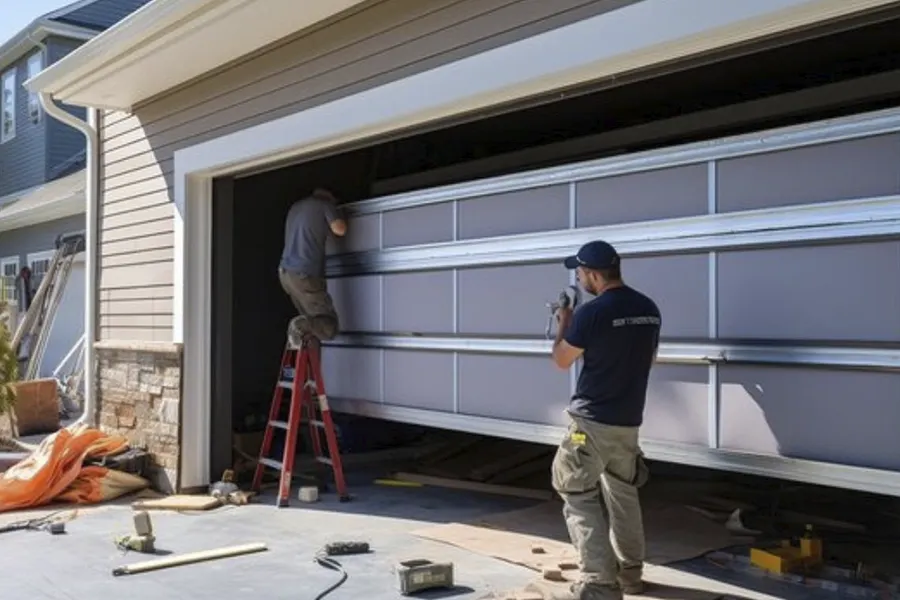
Serving older Colonials & new builds
Availability for same day service is based on the time of day that you call and the degree to which the schedule for the day is already filled. Our stock of the most common parts for the most common repairs means that garage door repair West San Antonio TX calls are usually a single visit event and do not require a return trip by the customer. (830) 463-8527 calls are answered by a live person who can advise whether same day service is available today or next working day. A two hour arrival time is advised and then texted to customer when the service truck is on the move.
We don’t quote prices over the phone as every door requires different repair work. On every garage door repair West San Antonio TX visit our experienced and fully stocked technician will carry out a survey and provide a written price for the exact work required to complete the job. You will be provided with the price for the work and the price for the return trip before any work is commenced.
We agree a 2 hour window with you for your arrival time before we close the call. This window is measured from the time that the call was dispatched. You will also receive a text when the truck is on the move. Please call (830) 463-8527 and speak to the dispatcher who will advise on availability.
We serve West San Antonio and surrounding areas including the streets of Woodlawn Hills, Culebra Road, Military Drive West and the Loop 410 corridor. Our primary ZIP code is 78228. If you live off of one of these streets, we can tell you on the phone call whether or not you are within our service area.
Century Garage Door Repair Service is located at 4241 Woodcock Dr Ste C213, San Antonio, TX 78228. Our phone number is (830) 463-8527. When you call us, the dispatcher will send the closest repair truck to your location. We come to you.
No. We are talking about massive forces stored in springs and cables. In most cases releasing such forces can cause serious harm. Tools and methods to measure and remove parts like these are generally not part of your average household toolbox. The tolerance for error is extremely small and the consequences of error severe. Call us instead.
A grinding or banging noise from a door is not an emergency but it does need to be addressed as soon as possible as it can cause damage to the door. In West San Antonio with the heat we experience, lubrication can dry up quickly. Our experienced technicians can schedule a garage door repair West San Antonio TX service call and determine the cause of the noise.
There’s no single figure, because the price depends on the door’s size, material, insulation level, and whether the existing opener stays or gets replaced. The number comes after our tech measures and writes it out in a quote, before any work starts.
Yes, high temperature in an uninsulated garage can cause failure to the logic boards, the plastic drive gears and lubrication. The logic boards seem to fail first, then the gears can crack or strip. These types of failures seem to happen in the worst part of the summer and we carry the relevant boards and gears for the most popular openers.
A door fitted with two springs can often suffer a break of one spring fairly closely followed by the other. Whilst we recommend replacement of both springs in this situation, we would replace both for you in a single visit and explain the reasons for this prior to commencing work. The door would then be properly balanced. The decision to proceed with the work would then be yours.
Call (830) 463-8527 24/7. A live person answers, agrees a 2 hour arrival window with you, and you get a text when the truck is on the way. Century Garage Door Repair Service, 4241 Woodcock Dr Ste C213, San Antonio, TX 78228, takes garage door repair West San Antonio tx calls 7 days a week.