
Garage Door Lock: What Homeowners Should Know Before You Throw One
The short answer
The best garage door lubricant for a residential door is a silicone spray or a white lithium grease, and the water-displacing penetrating spray most people reach for is neither one. For a full pass done by somebody who does it daily, call Century Garage Door Service at 833-435-4540.
A garage door lock is a mechanical device that physically pins the door in place, and on most sectional doors it is a sliding bolt that drops into a hole punched in the vertical track. Everything else sold as security is electronic, and electronics stop working the moment the power does.
That distinction is the whole subject. A garage door lock does not care about codes, batteries, or whether somebody copied your remote, because it is a piece of steel through a piece of steel. What follows is what each type does, what it asks of the door it is fitted to, and the one habit that turns a good lock into a bent track.
Table of Contents
What a garage door lock actually is
Ask for a garage door lock and you will be shown two unrelated things. One is mechanical, a bolt or a bar that stops the door moving. The other is a mode on your wall console, sometimes labelled vacation, that tells the opener to ignore remotes. The second one is useful and it is not a lock.
The test is simple. If the power dies and the electronics go with it, does the thing still hold the door shut? A slide bolt does. A console mode does not, because with the opener dead the door is held by nothing but the trolley, and the trolley can be released from outside by anyone who can reach the cord.
So the useful question is not which garage door lock is strongest in a catalogue, or even how to lock your garage door in theory. It is which one actually gets thrown, on your door, on a normal Tuesday.
The slide bolt you probably already own
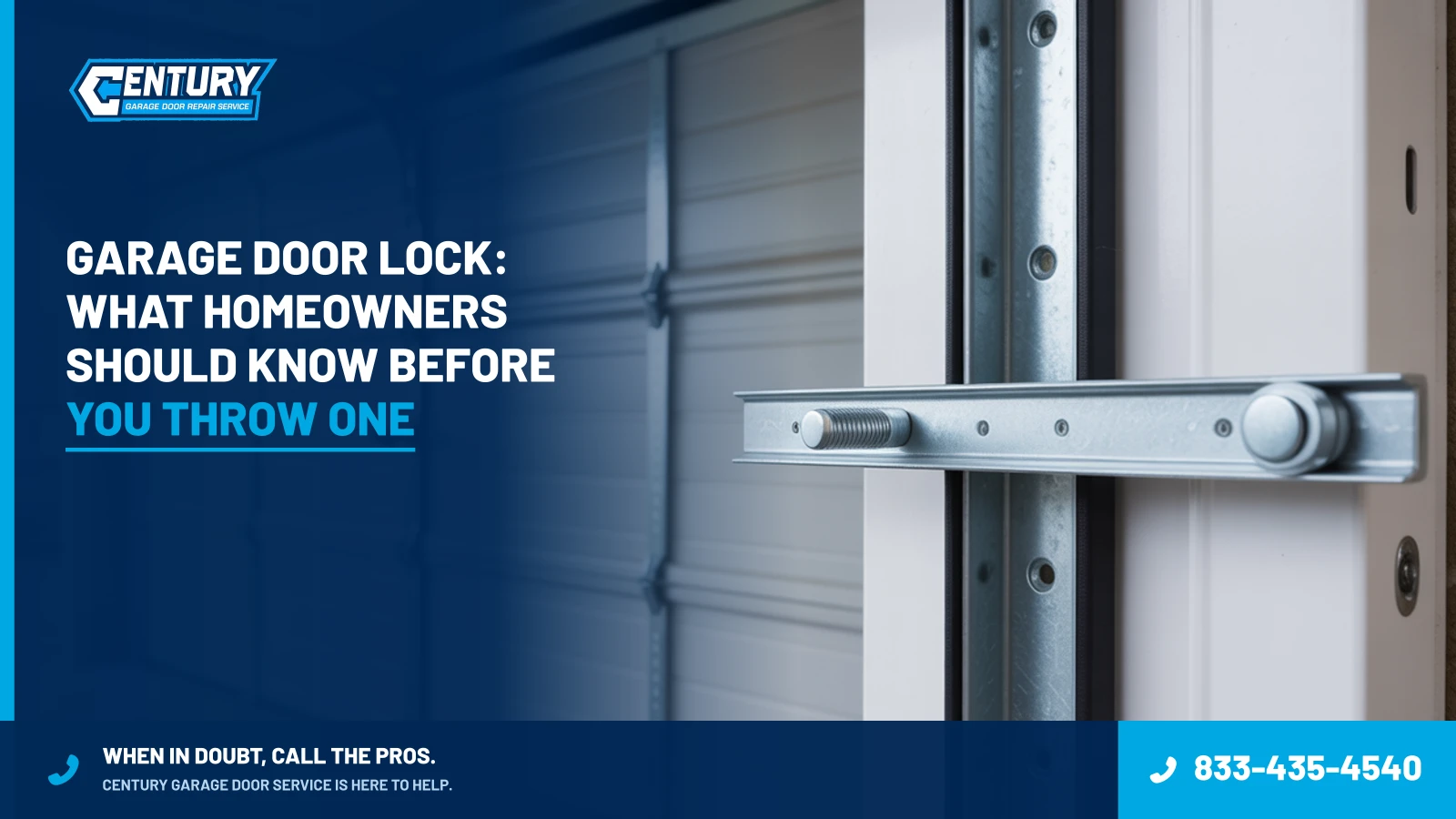
Most sectional doors leave the factory with a slide bolt on the inside of one or both vertical tracks. It is a flat steel bar in a bracket, and it slides sideways through a punched hole so the door cannot travel up.
Two things go wrong with it. The first is that it never gets used, so the bolt seizes in its bracket and the hole fills with paint. The second is that it gets fitted on one side only, which is fine on a single door and marginal on a wide double, because a double door lifted at the unlocked end will flex enough to walk the top section out of its own track.
Throw it, then pull up on the bottom section with real effort. A garage door lock that lets the door rise even an inch is telling you the bolt is undersized for the hole, the bracket has spread, or the track gauge is too light to resist it.
ALT: garage door lock bracket and slide bolt with the punched hole visible in the track
T-handle and cylinder locks on a one-piece door
A one-piece tilt-up door usually carries a keyed T-handle in the middle of the panel, with two flat bars running left and right behind the skin to bolts that shoot into the jambs. Turn the handle and both bars move together.
This is the most self-contained garage door lock in common use, because the whole mechanism lives on the door and needs nothing from the track. It is also the one that fails quietly. The bars run in guides that fill with grit, and the cylinder wears, so the symptom is a key that turns further every year until one day it turns and nothing shoots.
Use a dry graphite lubricant in the cylinder rather than a wet oil. Oil holds dust, and a lock for garage door use sits at the dirtiest height on the building. The bars themselves want a light film on the guides and nothing on the bolt faces.
Jamb bolts, side locks, and what they need behind them
A jamb bolt is a retrofit. It mounts to the door edge or the jamb and throws a pin across the gap, and it is the usual answer on a sectional door with no factory bolt or on a door where the track hole has been chewed out.
What decides whether it works is what sits behind the jamb. A bolt shot into a hollow trim board is theatre. It needs solid framing, or new blocking scribed in behind the jamb, and on a masonry opening it needs the right anchor rather than a plug pushed into soft mortar. This is the part that turns fitting a garage door lock into carpentry, and it is why the honest answer to how to lock a garage door is sometimes that the opening needs work first.
Fit them in pairs on a double door. A single side bolt on a wide door is the same flex problem as a single slide bolt.
Need a Professional Tune-Up?
Skip the ladder. Our local technicians perform full safety inspections and comprehensive lubrication to keep your system running silently.
The console button is not a garage door lock
The lock or vacation button on the wall console tells the opener to stop accepting radio codes. It is genuinely worth using, and it defeats a stolen or cloned remote completely, because the receiver simply stops listening.
What it does not defeat is anything mechanical. It does not stop the door being lifted, it does not stop the trolley being released, and it does nothing at all once the power is out. Treat it as a companion to a garage door lock rather than a substitute for one, and read our garage door security guide for how the layers stack up across the whole bay.
Garage door locks compared, side by side
| Type | Fits | Holds without power | Weak point |
|---|---|---|---|
| Slide bolt in the track | Sectional, factory or retrofit | Yes | Seizes unused, needs a sound track |
| Keyed T-handle with side bars | One-piece tilt-up | Yes | Cylinder wear, gritty bar guides |
| Jamb or side bolt | Sectional, retrofit | Yes | Only as good as the framing behind it |
| Padlock through the track hole | Sectional, any | Yes | Easy to cut, marks the track |
| Console lock or vacation mode | Any powered opener | No | Mechanical attack, power cut |
| Smart controller with a lock state | Any connected opener | No | Network, app, and power all have to work |
The right-hand column is the one to read twice. Every mechanical garage door lock in that table fails through wear or through what it is fastened to. Every electronic one fails through losing power.
The mistake that bends a track
Here is the habit that costs people a repair. The manual lock gets thrown at night, and the next morning somebody hits the remote out of reflex.
The opener does not know the door is pinned. It pulls against a bolted door with its full travel force, and the force has to go somewhere. It goes into the top section, the trolley arm, the drive gear, and the track at the point the bolt is holding. A screw-drive or a wall-mount unit is worse than a belt, because there is less give in the drive train to absorb it.
There are two clean fixes. Throw the console lock at the same time as the mechanical bolt, so a remote press does nothing. Or, on a door you lock every night, uncouple the opener from the door entirely and treat it as a manual door until you are done, which our garage door manual release guide covers properly.
If you have already done it once, look before the next cycle. A creased top section, a bent lift arm, or a track pulled off its wall bracket all need attention before the door runs again, and a door forced out of square is garage door off track repair work rather than a lock question.
Fitting a garage door lock to a door that never had one
Three things get checked before anything gets drilled.
- Track gauge and condition. A bolt through a light residential track in a door that already flexes will chew the hole into a slot inside a year.
- What is behind the jamb. Solid framing, blocking, or the correct masonry anchor. Trim board is not a fixing.
- Whether the door is square. A door that already runs tight on one side will bind on a new bolt, and the bolt will be blamed for it.
The order matters too. Squaring and hardware first, the garage door lock second, because a garage door lock fitted to a door that is out of true holds the door in the wrong position and makes the bind permanent. Rollers, hinges, and track grade are their own subject and our garage door hardware guide covers what the grades mean.
What a garage door lock cannot do
A lock stops the door being lifted. It does not close the gap along the top edge, it does not cover a window somebody can see the empty bay through, and it does not do anything about an emergency release cord hanging low enough to hook from outside. Those are real holes and they belong to our garage door security guide, which owns the whole-bay picture.
It also does not replace the annual look at the door itself. Homeowner guidance published through the International Door Association homeowner safety resources (doors.org) makes the same point in plainer words: the hardware that moves is the hardware that wears.
FAQs: garage door lock questions
Does the lock button on the wall console actually lock the door?
No, not mechanically. It tells the opener to stop accepting radio codes, which defeats a stolen or copied remote completely. The door itself is still only held by the trolley, so it can be lifted or released by hand, and the button does nothing once the power is out. Use it alongside a bolt, not instead of one.
Can a garage door lock be fitted to a sectional door that never had one?
Usually yes. A slide bolt can be added to the vertical track if the track gauge is sound and the punched hole lands in a flat run, and a jamb bolt is the alternative where the track will not take one. What decides it is the framing behind the jamb, because a bolt anchored into trim board holds nothing worth having.
What happens if the opener runs while the slide bolt is thrown?
The opener pulls against a pinned door at full travel force. That load lands on the top section, the lift arm, the drive gear, and the track where the bolt is holding, and a screw-drive or wall-mount unit transmits more of it than a belt does. Check the top section and the lift arm before running the door again.
Is a padlock through the track hole as good as a proper lock?
It holds the door as well as the track does, which is the same as a slide bolt. The differences are practical: a padlock is cut in seconds with tools somebody may already be carrying, the shackle marks the track, and it is easy to leave hanging in the hole where the door will find it. A purpose-made bolt is tidier and quieter.
Why has my keyed T-handle stopped shooting the bars?
Wear, almost always in two places. The cylinder rounds off, so the key turns further each year until the cam no longer picks up the bar. Or the flat bars behind the skin are running in guides packed with grit, so the handle turns and the bars do not. Dry graphite in the cylinder, a light film on the guides, and no oil anywhere.
Do I still need a garage door lock if the opener uses rolling codes?
Rolling codes solve one problem well, which is somebody capturing and replaying your signal. They do nothing about a door being lifted, a trolley released from outside, or a power cut. A mechanical bolt covers exactly the cases the radio cannot, which is why the two are worth having together rather than choosing between them.
Can a locked door be opened from outside in an emergency?
Not by the fire service in any quick way, and that is worth thinking about before you make a habit of it. A door bolted from the inside has to be cut. If the garage is the only route to a habitable room, or somebody sleeps beyond it, talk it through with a technician on 833-435-4540 rather than bolting it nightly and hoping.
Get a garage door lock fitted and tested
A garage door lock is only worth the steel if it is thrown, and a garage door lock is only safe if the opener knows it is there. Century Garage Door Service answers live around the clock at 833-435-4540 and gives you a two-hour arrival window with a text when the truck rolls. A technician checks the track gauge, the framing behind the jamb, and whether the door is running square before anything gets drilled, then fits the bolt and tests it against the opener so a reflex remote press cannot bend anything. You get a written quote before a tool comes out, and only the quoted trip fee if you decline. Our trucks run stocked, so most jobs finish in one visit, and the workmanship is warrantied. Seniors and military get a standing discount. So do first responders. To have the lock and the rest of the hardware looked over together, book a garage door lock service visit.
Table of Contents
Emergency Repair?
Did a loud bang follow a door that won't lift? Don't risk injury. We offer rapid emergency response.